

Retail media’s easy growth phase is over. As in-store networks scale, performance TV matures, and measurement pressure intensifies, analyst Andrew Lipsman outlines the 10 trends that will define retail media in 2026 and expose which networks, brands, and strategies are built to last.

The stage is being set for 2026 to be one of the most dynamic and consequential – but also challenging –years in digital advertising’s third big wave. It will separate the contenders from the pretenders.
Now that the easy money is gone, RMNs must find new avenues for growth amid organizational turf battles and mounting pressure from the C-suite. They’ll need to balance meeting short-term revenue goals while making necessary investments to achieve long-term scale.
Meanwhile, advertisers are being asked by RMNs to up their spend and tap new budgets at the same time their management demands greater proof of marketing performance. They’ll need to balance hitting short-term KPI targets while testing into emerging retail media channels that are valuable arbitrage opportunities for their media investment.

Retail media remains fertile ground, but buyers and sellers will have to fend off both internal and external threats to achieve their ambitious growth targets in 2026.
With this as a backdrop, here are my predictions for the top 10 trends in retail media for the year ahead.
Advertisement
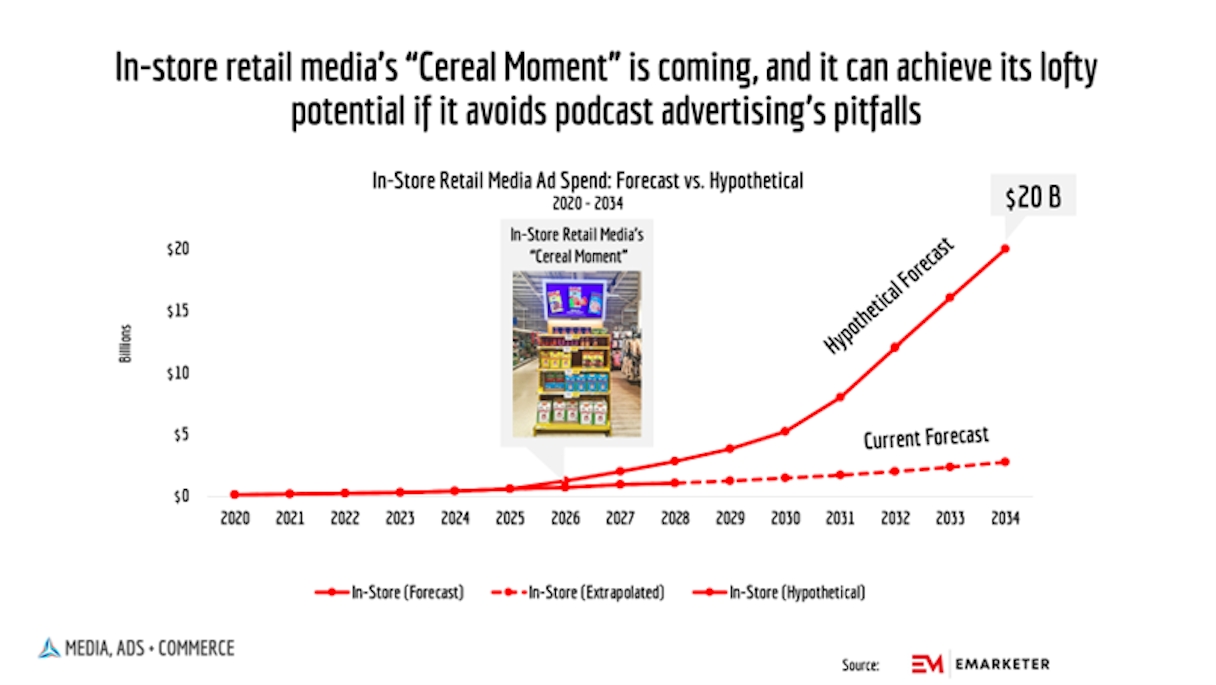
1. In-store retail media will intensify as a battleground for top CPG retailers. After years of hesitation, major US retailers are finally rolling out in-store media networks – well behind their counterparts in Europe like Tesco. Kroger plans an aggressive 2026 screen rollout, and Albertsons isn’t too far behind. Expect other leading players like Walmart and Instacart to enter the fray with more scalable offerings than they currently have. By the end of 2026, not only will in-store media networks be real and tangible in the US market, but it will quickly turn into a royal rumble for national media budgets.
2. Performance TV will hit an inflection point for growth – but run into ROAS roadblocks. With Amazon Ads now able to access inventory for at least 50% of the ad-supported CTV market, the future of closed-loop TV is here. Performance TV will become too prominent for CMOs to ignore and begin to attract national media investment in a way that hasn’t happened yet for retail media.
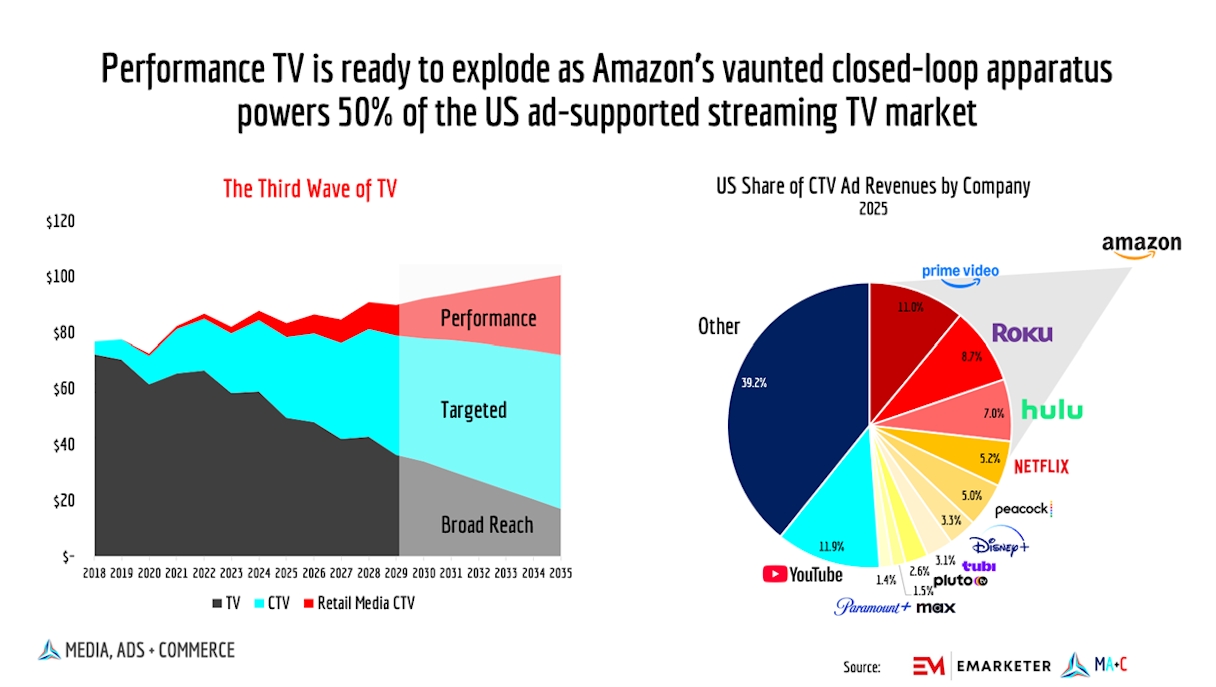
But there will also be some stumbling blocks as “performance myopia” leads to overreliance on ROAS and other short-term performance KPIs, making it difficult to pencil out given the channel’s premium CPMs.
“ROAS – and particularly last touch ROAS – should never be the metric of success for measuring the effect of TV campaigns,” said Adam Epstein, Founder & CEO of GigiTV. “Deterministic signals that shift the attribution model from first-touch or assisted attribution are quick and easy wins for marketers, but ultimately if one is making investments in TV they should simultaneously be matching that with investments in advanced probabilistic measurement like incrementality testing and MMMs.”
3. Marketing mix models will get scrutinized for underestimating the value of retail media. Traditional MMM is barely fit for purpose in the age of retail media. The econometric modeling approach worked well in a GRP-driven advertising market dominated by tonnage, with limited media channels like TV, radio, and print. But in today’s fragmented digital media landscape dictated by real-time optimization of performance media, MMM is quickly losing relevance. Retail media consistently underperforms in these models, which keep pointing marketers to the same media channels as before – TV, Meta, YouTube, and off-site programmatic – even as each one becomes less efficient at reaching the right audiences. Incrementality approaches like causal modeling often tell a very different story, with leading RMNs consistently rating among the top-performing channels.
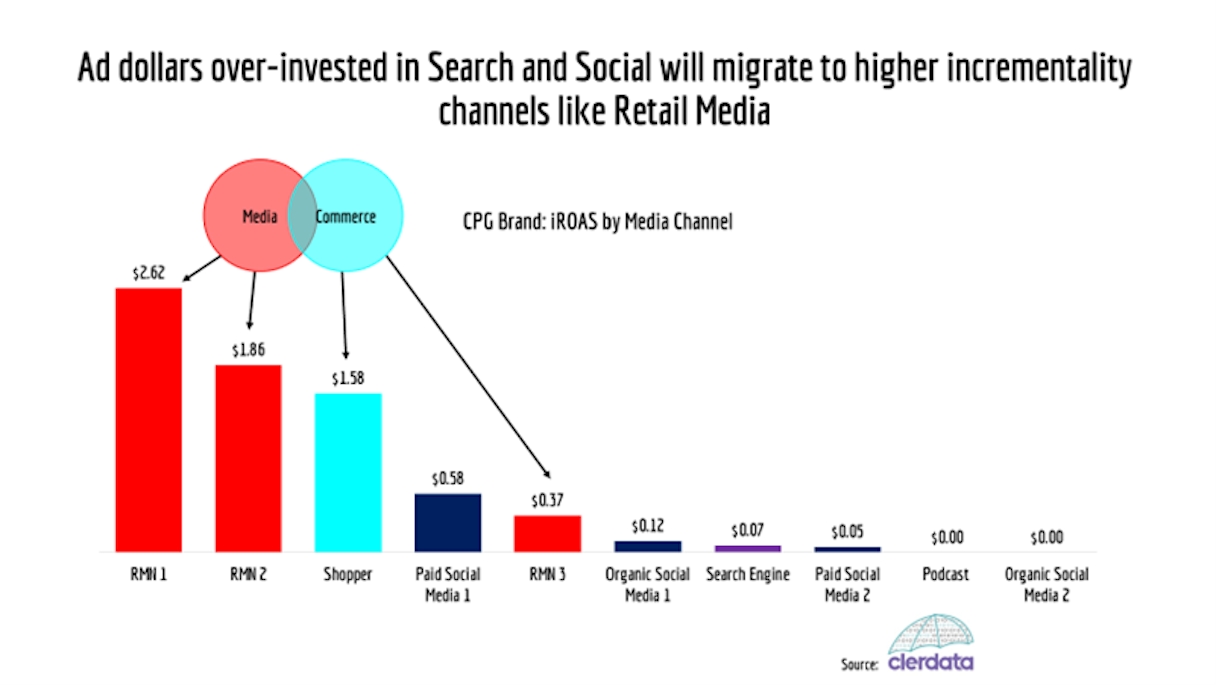
“MMMs [may] still have a purpose, but it's not for retail media and it's not more widely for companies in need of scalable and rapid answers about where to spend the next dollar,” said Meghan Corroon, CEO and co-founder of Clerdata. “When you speak with brand leaders today and simply ask them if MMM's meet their measurement needs you get the exact same response hundreds of times: too slow, not scalable, and not granular enough.”
4. 3P marketplaces will create RMN momentum for newly launched specialty retailers. Third-party (3P) marketplaces are by far the biggest driver of RMN growth – as Amazon and Walmart, which own 85% of the US market have proven – but have barely been leveraged by some of the largest and well-known retailers. That’s all changing, with category leaders like Best Buy, Lowes, and Ulta Beauty rolling out 3P marketplaces in the past year. Expanding their advertiser base into the mid- and long-tail will diversify revenue and drive monetization.

5. RMN creator activations will become central to retail media offerings as brands prioritize breakthrough creative. Unilever has said it will up its social media spend from 30% to 50% of its marketing budget, with a primary emphasis on creators. On the RMN front, Walmart Connect’s push into the creator space should be watched closely and other retailers will likely follow their lead. RMNs are uniquely positioned to prove the ROI of creator campaigns, and their first-party data can also help brands identify the right creators to activate. As scaled RMNs offer cross-platform capabilities, creator content becomes an effective way to thread on-site, off-site, CTV, and in-store campaigns together.
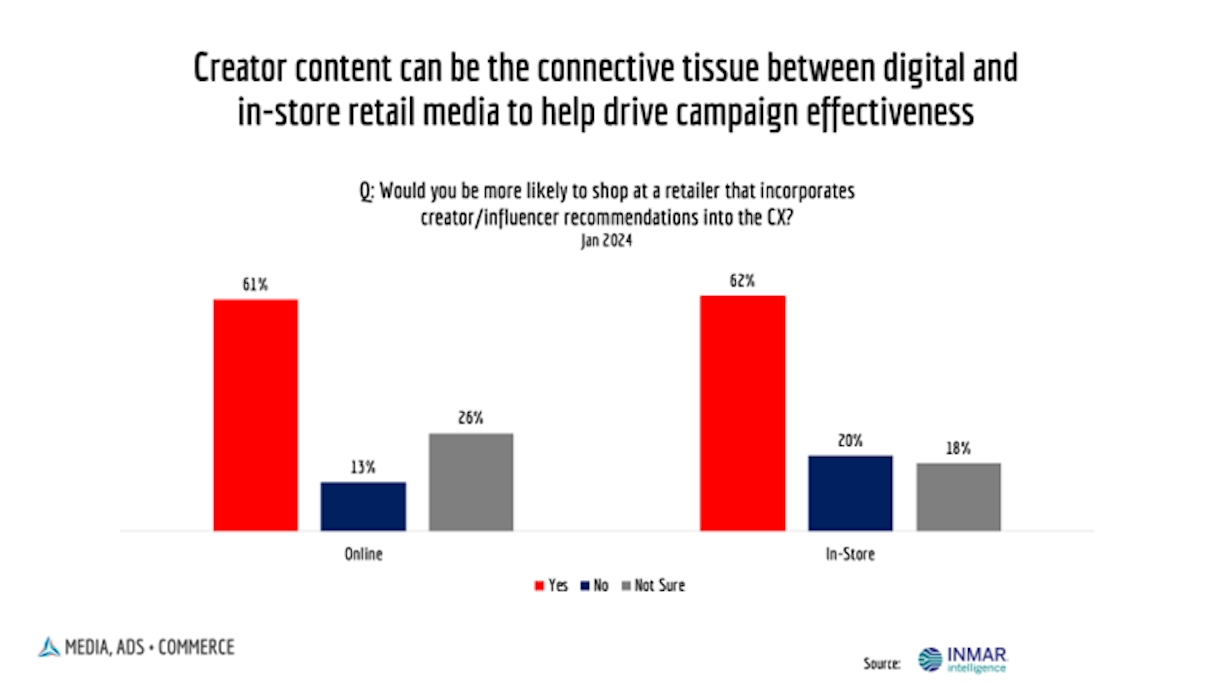
“The pressure from merchant groups, and even customer experience teams, is forcing RMN teams to create more cohesion and sync with the entire retail shopping journey,” said Leah Logan, VP of Retail Media at Inmar Intelligence. “The missing link continues to be a content strategy. Creator video fills RMNs’ need for creative assets while enabling discovery, brand storytelling, and influencing purchase for advertisers.”
Advertisement
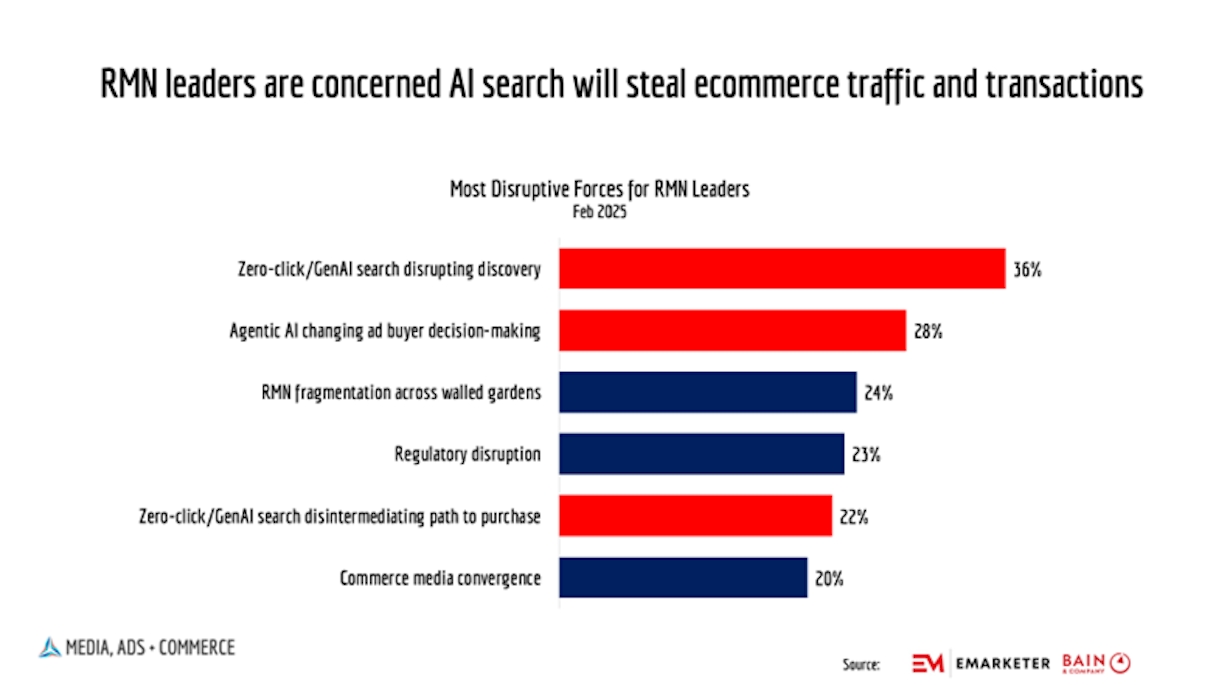
6. Agentic commerce will have no discernible impact on e-commerce traffic. Despite widespread concern of agentic commerce as an existential crisis for retail media, traffic to e-commerce websites will continue to see gains in 2026. Whatever on-site traffic it siphons off the margins will be more than made up for by incremental e-commerce shopping generated by AI search. RMN leaders worried that agentic commerce is an existential crisis need not worry – AI-assisted shopping is more likely to help than hurt.
7. Digital endcaps will gain prominence in-store and on-site as dynamic video proves its value. On-site display and video ads – the original ‘digital endcaps’ – are gaining popularity with brands as a way of increasing new-to-brand customers and driving incremental sales, even without a click. As sponsored product inventory gets more saturated on the biggest retail media channels, brands looking to migrate dollars toward more productive media will realize that ‘digital endcaps’ are the way to do it. Add that to next year’s boom in in-store retail media, where Tesco in the UK has proven the value of in-store digital endcaps – and major retailers like CVS are now rolling out their offerings in the US. This will give other big retailers the confidence that they can do it too.

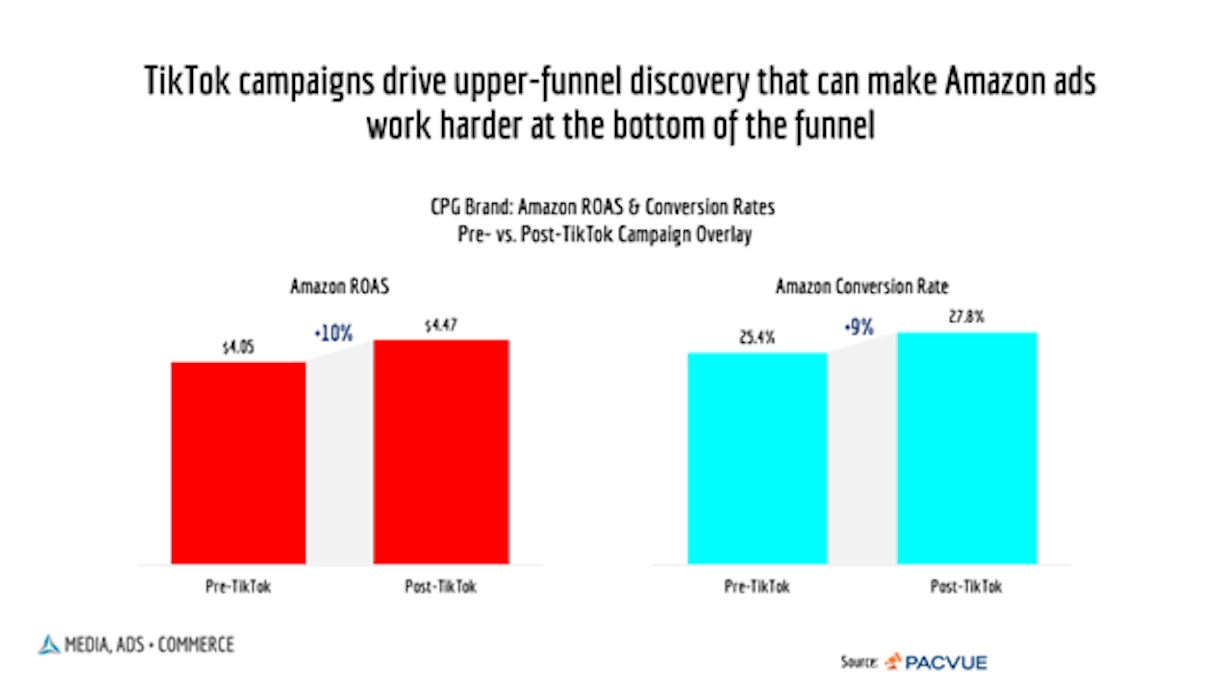
8. Social video will drive gains in off-site retail media by tightening the loop between discovery and purchase.
Brands will shift their off-site retail media investment away from open web display and toward social video as discovery commence proves it can tighten the loop from exposure to purchase. Social media’s unique ability to drive discovery makes retail media work harder at the bottom of the funnel, and brands that harmonize these channels will discover synergistic effects. It is not uncommon to see TikTok campaigns layered on top of existing Amazon spend get a double-digit boost in conversion rates and ROAS.
Advertisement
9. Experiential retail media will put a spotlight on high-value formats that drive customer lifetime value. Short-term ROAS from online sales has dominated retail media performance metrics to date, but as the conversation shifts to in-store advertising and high-value media the measurement will need to evolve with it. Sam’s Club is positioning itself as a Retail Experience Network, leaning into its experiential activations and digital signage. Product samples are proving to be the most effective media at driving immediate trial and conversion – which translates into incremental sales effectiveness over short-term and long-term attribution windows.

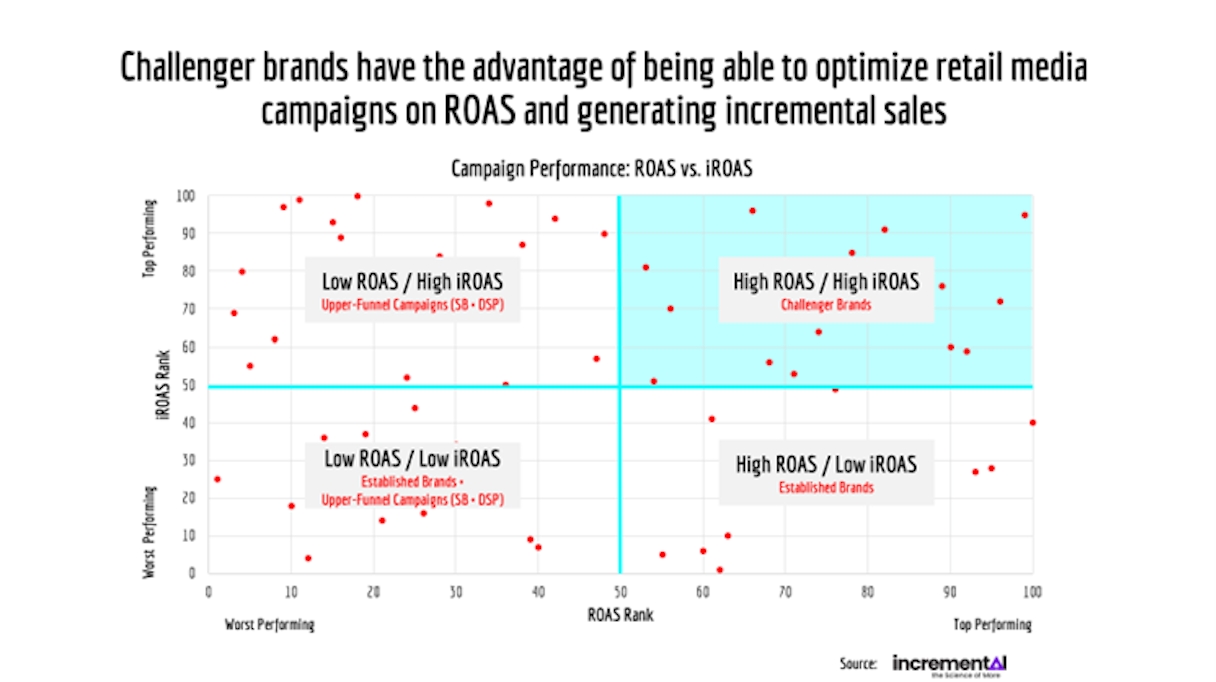
10. Challenger brands will leverage retail media advantages to gain share versus established brands in a downturn. Established brands historically gain share in recessionary markets because they can weather the storm and maintain necessary levels of marketing spend. But challenger brands have several built-in advantages with retail media that will lead many to gain share at the expense of established brands in the coming year. They can more quickly test emerging channels like in-store retail media that take advantage of conquesting and new customer acquisition strategies. They also have an optimization advantage, because KPIs like ROAS and new-to-brand actually correlate to incremental sales. Established brands – already incentivized to invest in strategies like branded search and retargeting that make ROAS look great but do little for incrementality – will double-down gaming attribution to keep the C-suite happy.
Bonus prediction:
1P data clawbacks will hit platform partners as RMNs realize they’ve been giving away their most valuable asset. It’s ironic that retailers hyper-protective about sharing data with brand partners are only too eager to provide that same data to media platform partners. Perhaps not recognizing that first-party shopper data is their key competitive advantage vs. Meta, Google, and OpenAI, RMNs will begin to reckon with the uncomfortable truth that they’ve given up this advantage and enabled their own disintermediation as platforms offer comparable data quality at lower prices. With the need to close the Pandora’s Box they’ve opened, RMNs will deploy new technologies to help them regain ownership over their first-party data.
Andrew Lipsman is a US-based independent analyst and consultant. He writes the Media, Ads + Commerce newsletter on Substack and will contribute to The Drum’s enhanced coverage of retail and commerce media throughout 2026.
Commerce media is moving fast. The Drum Awards for Commerce Media are here to recognise the work keeping pace - and setting the standard. Join us in Miami in April as part of The Drum’s year-round Commerce Media program. Learn more and enter.