


After a non-linear journey spanning agency roots, a year of global travel, scaling brands and guiding Tribe Dynamics into CreatorIQ, the CMO shares with Tim Healey how she is now shaping the creator economy by putting storytelling at its core.

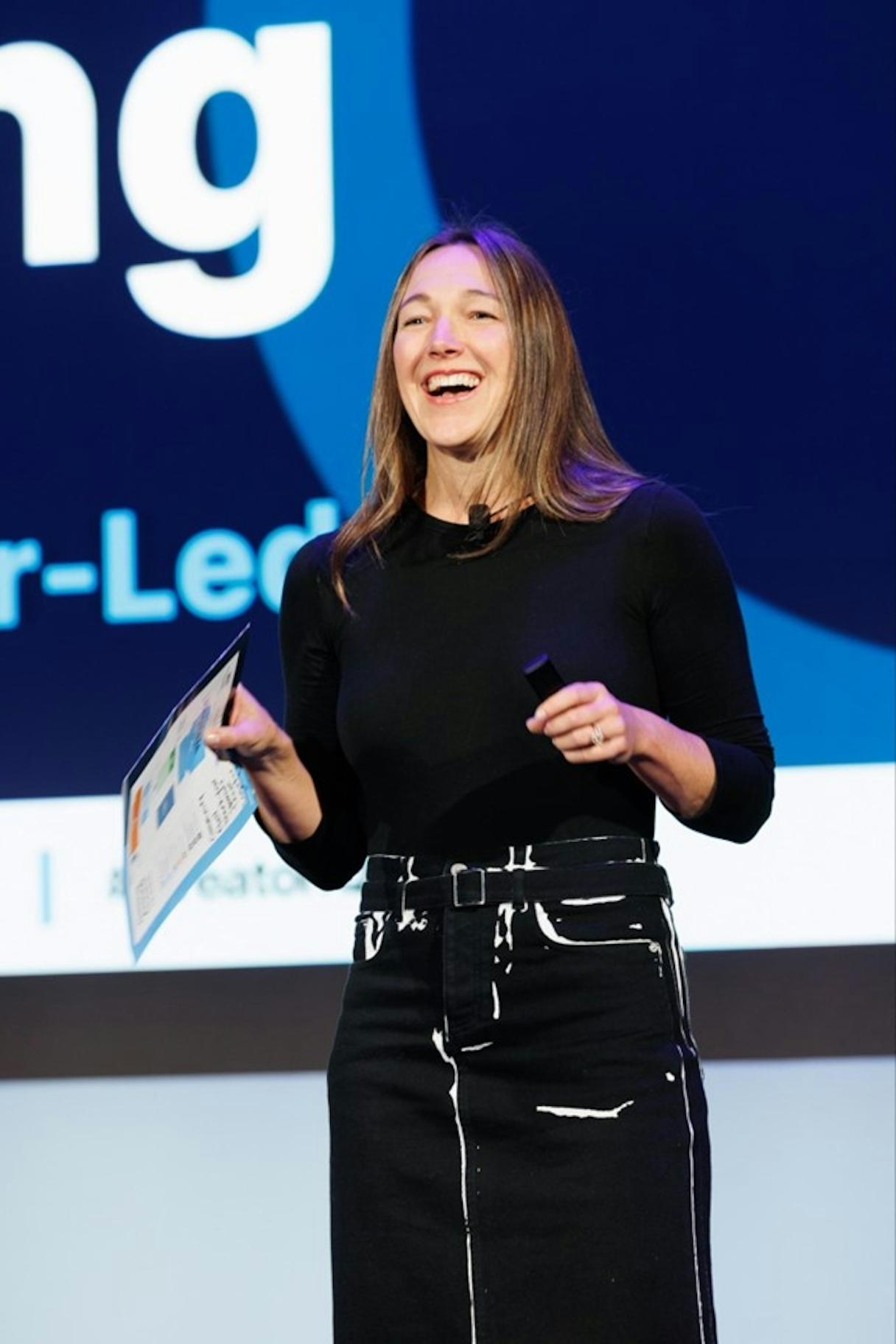
CreatorIQ CMO Brit Starr
You’ve been an account supervisor. You took a year out and raised $10,000 for charity. You then spent six years as a content strategist at Tribe Dynamics, which was acquired by CreatorIQ in 2021. You became SVP of marketing at CreatorIQ, and then CMO. Please walk us through your career path to today.
I’ve had a somewhat non-linear career. The ‘through thread’ has always been storytelling. I started my career in an agency: a small shop that was really focused on unlocking the truth of a brand.
We worked with long-term retainers, working up from positioning. I was really lucky to get to work with passion categories. My clients were in beer, food and music. We also had banks on the roster.
I was trained in the discipline of: what is the truth of the story? What are we trying to convey? How do we build that emotional connection from the ground up in a way that brings together all creative, content, and customer experiences?
It was a small shop, so if you were willing and able, and you showed up, you kept getting a seat at bigger tables. Fast-forward, I had been in Austin, and I did what many people do: I quit my job, put all my stuff in storage, and traveled for about a year.
I had always wanted to do a gap year. I wanted to do that after university but it hadn’t happened, so I traveled across Africa and Southeast Asia. It is the best experience I’ve ever had. After my year off, I landed in San Francisco, no job, no plan, just a carry-on suitcase.
While I was in Africa, I’d actually come in contact with a man named Chris Jordan. He used to be the global director of quality at Starbucks and he had been recruited to be the CEO of a small specialty coffee company called Verve that was based in Santa Cruz, in the San Francisco Bay Area. He called and said, “We’d love to pick your brain about building out a management team. We have a product that is world-renowned within a very small niche of the coffee community. But we haven’t done much in terms of scaling the brand.”
I started working with him as a consultant and then joined the business. We scaled rapidly. We opened stores in LA, New York, and across Korea and Japan. Next, I did some consulting for Lyft and for Trulia.
The questions that people were asking were quite similar. How can I build content that resonates? How can I do more with less? What should my balance of agency and in-house be? What does storytelling look like for my industry?
While I was consulting, I got a cold call from Conor Begley, who had co-founded Tribe Dynamics. There were 18 employees at the time. The call was about a role that would not have been right for me, but I really enjoyed the conversation. A couple of months later, they brought me on as what I like to call ‘the first adult hire,’ somebody with a little more experience and who was technically older than the founders themselves.
They were really ready to scale. They had found something that was really special and wanted to see what they could do with it. I had a number of roles at Tribe. As with all startups, you get to learn everything and anything about the business. I was really able to work closely with the founders.
Together, we built on something that at the time was quite a novel idea: that creators could power a business. We generated more awareness and excitement about the space. We validated that you can also model around this behaviour. We grew the business and then got a call from a company called CreatorIQ.
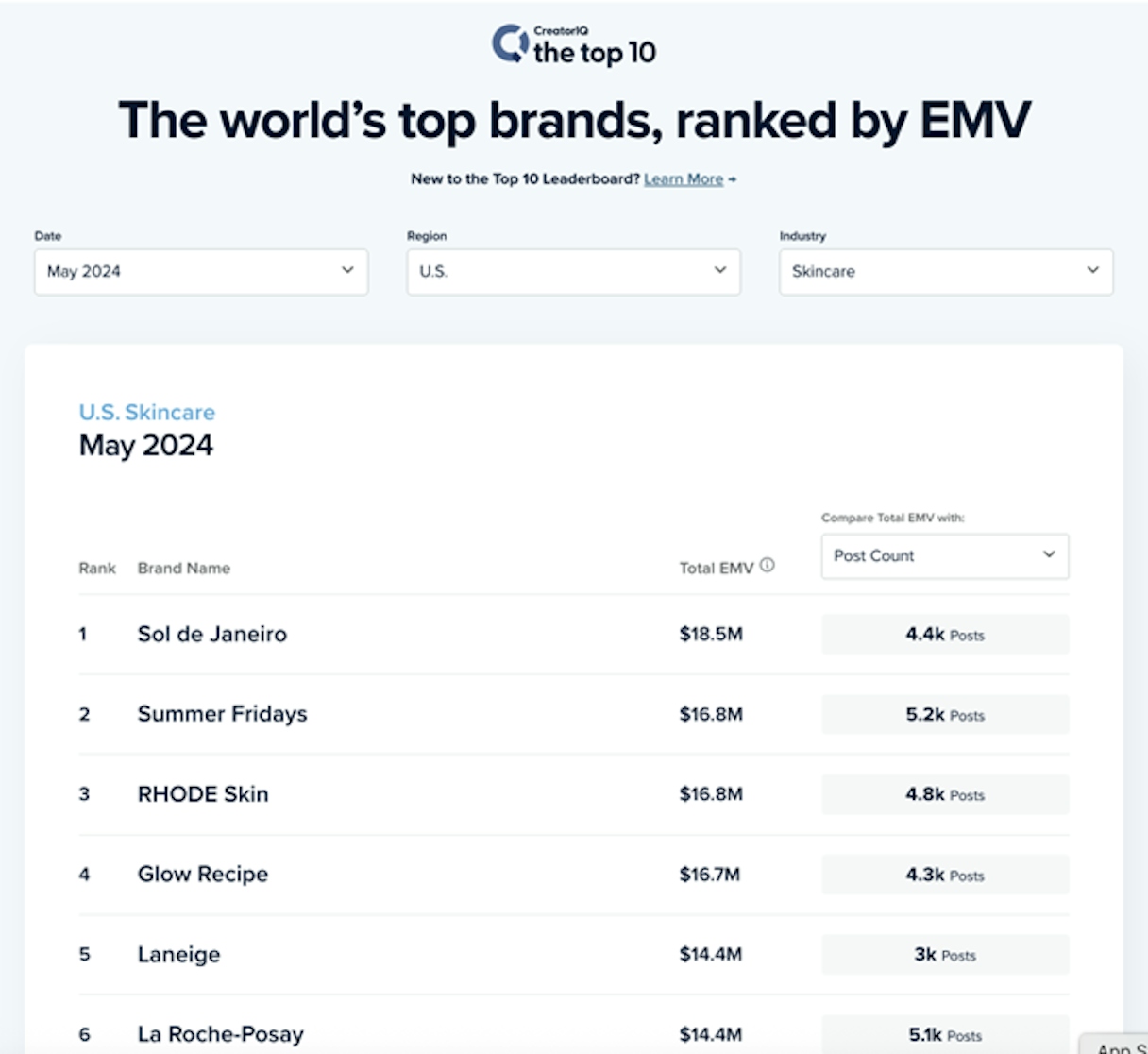
Tribe were seeking investment at the time, and CreatorIQ were interested in our intelligence analytics and the power of earned media in the creator space. They wanted to answer, how can you identify the creators that are already creating content about your brand, build your community, understand what value is being driven around your brand, and double down on what’s working? And then within that space, how are you stacking up against your competitors?
Tribe brought intelligence and analytics, and CreatorIQ brought workflow – complex workflows for complex businesses. They could enable campaign management, integrations, governance and safety. The combination of those two things – intelligence and workflow – made a ton of sense. The observation was: there is something missing in this market, and with our powers combined, we think we can serve that need.
Advertisement
What is the offer at CreatorIQ?
It’s intelligence and workflow for marketers who are serious about investing in the creator space. We are not for marketers who want to test out working with creators. People tend to graduate to using CreatorIQ, but once they’re here, they can grow with us, and they’ll never outpace us.
We talked a lot at our recent conference in London about the industry and how it’s maturing. We’ve really been building the infrastructure for that since day one so that we can best serve the multi-million, multi-year transformations that our customers are running.
What do the next 12 months look like for CreatorIQ?
This is a year of transformation. Last October, we announced the vision for the next generation of CreatorIQ, a brand-new platform that combines intelligence and workflows in big, bold new ways, accelerating the pace at which our customers can build confidence, control their growth, and validate their efforts.
Within the next 12 months, we will have all of our customers on the new platform. We will also have a brand safety product that is first of its kind that will be built outside of the platform.
We also recently launched our 6th “State of Creator Marketing” report. We’ve been tracking trends and creator marketing over time for the past 6 years at an industry and at a global level. One of the key findings is the juxtaposition between AI and human-led marketing.
The clear headline from the report is that creators are indispensable. Marketing budget allocation for creators is up 171% year on year and 20 points above the previous four-year average. Companies and organizations of all shapes and sizes are really putting creators at the center of their marketing strategy, versus just kind of allocating it as a channel.
Is one interpretation that creators are a super-human oriented response to homogenous AI-generated adverts from AI ad-making products?
I don’t think those things are mutually exclusive. AI, when layered onto a distinct creator community and distinct creator data, can be very powerful. Creators are out there all day, every day creating content about your brands and products that is effective with their communities. If you have a model that’s learning on that and building up a base of understanding for what works, not just for you as a brand, but through the eyes and lens of each of those individual creators and their communities, that’s really powerful.
When you say brand safety, can you tell me about that?
Think about brand suitability. Depending on the kind of brand you are, safety means different things. The majority of conversations happening about brands are happening outside of the brands’ control, on social, and often, by content creators.
Creators yield significantly more influence, and one could argue that their voices matter most. As a brand, it is incredibly important that you understand the conversation happening about you.
This must be monitored – both in the confines of the campaigns you’re running, but also more broadly, because brand perception doesn’t start and stop around the dates of a campaign. If you can catch anything being said that is not suitable about your brand, then you can intervene or participate in that conversation. You can also use brand suitability as a lens to help you choose which creators to partner with.
To do this, you need the right governance and permissions set in place internally. A lot of the brand safety work happens manually, in-house, with our customers. But for large organizations, who often care the most about brand risk, the next step is for that to be implemented in a programmatic way, with an automated system that flags things for you, so you don’t have to spend hours, or millions of dollars over a course of five years with 40 people in a dark room manually monitoring all the content that's about you.
Brand safety is making sure that you know the conversation that’s happening, and that anything that is outside the bounds of your definition of brand suitable is being flagged, and that the proper protocol is in place for when this happens.
How is your marketing team structured?
I oversee revenue marketing, brand marketing and product marketing. Out of all the organizations across our business, the marketing teams really touch everything. We work directly with our customers to help them figure out how they need to excite, educate and enable their internal teams around the relatively new creator space.
Our 10+ years of data inform the research and insights that we share to provide thought leadership, but it is all tied back to customer marketing. What do our customers need to know? How can we answer their questions? How can we bring their stories and successes forward? Our customers sit at the heart of everything we do.
In our demand channels, we constantly ask: how can we add value at every interaction or engagement? We aren't trying to change minds about creator marketing, but we are trying to change minds about marketing. And that's a big job.
Drawing on your leadership expertise, what has your career taught you that helps you make a great team?
Flexibility and ownership. We build for a culture of ownership on our team. Everyone is there in service of something, and it’s really important that they have the agility and flexibility to build and succeed.
I’m very happy when my team ‘fails forward.’ They need to be trying things and bringing ideas to the table, whether they are a day one intern or a tenured senior VP of brand marketing. I expect and want to see that.
People need to be really ‘leaned in.’ I think excitement about what you do is also incredibly important, especially in a space like ours. At CreatorIQ, it doesn’t have to be that you’re super excited about influencer marketing. That’s not actually what drew me to the job. At first, I was excited about the ability to sit across the table from other marketers and teach them something new.
Through our data, we have the power to sit at a table across from a senior marketing leader at a brand and tell them something about their brand that they did not know. I think that is fascinating. My team has the ability to market to marketers and to help them change the way they think about and approach marketing – that’s what lights me up every day.
Finding that thing that’s going to keep you really connected to the work that you’re doing every day is crucial – and that comes through flexibility and ownership.
What’s your first memory of a marketing success that you were part of where you felt: this is the role for me?
I worked on Shiner Beer. It’s the fourth-largest craft brewery in the US. We built their positioning from the ground up. That work is the example I give people when it comes to being able to identify a ‘core kernel of truth’ for a brand.
Shiner was brewed and bottled in Shiner, Texas, by 66 brewery workers. We decided that Shiner was effectively a ‘champion of small.’ You could be small, and that could be powerful. This work pre-dated the craft beer revolution, which made it a very novel idea at the time. You could be a bit of an underdog, but that could be your strength in the category.
For me, the approach felt right. It felt exciting. To bring it to life, I got to go interview all 66 brewery workers. It’s a simple idea that’s so powerful, and it’s still driving the brand today.
Advertisement
Can you tell us about a customer research discovery you've made that you found surprising?
Our first customer pulse survey that we did after the acquisition by CreatorIQ surveyed around 600 of our closest customer friends. We asked them: what value do you get from us? What are you trying to accomplish? What jobs are you trying to do? What gets in your way?
We heard from our customers that they’re still trying to do the same jobs they’ve been trying to do since day one: discover the right creators for their brands, programs and initiatives, manage those activations effectively, and measure the efficacy.
That was so grounding for the business. Since then we have doubled down. You can innovate within that, but don’t ‘jump the shark’ and innovate for the sake of innovation. Instead, you should understand what your customers are trying to do, and innovate within the guardrails that they give you.

How do you surf the tsunami of rapidly evolving marketing technology?
We give our teams a lot of flexibility to play and to experiment, and I allocate budget specifically for a little bit of research and development within the team. For example, we have an AI task force within our marketing team. They meet weekly. They test, they learn, they bring ideas to the wider team.
For internal enablement, we’ve been using the notebook LM quite a bit, which is a product that can take dense material information and present it in various formats, such as an audio format, for example, like a podcast, where there's banter and chatter.
When we’re trying to teach our entire company about new technology that we’re building, using something like that has been incredibly effective. Everyone learns in different ways, and it can take something that is a little tougher to digest and feed it back in a way that is chatty and easy.
Leading the charge for our business is Nate Harris, our VP of innovation. The CreatorIQ platform is built on AI, so it’s not new to us, but I think having perspective and understanding how you want to unlock value with the technology you use is incredibly important.
We have a pretty rigorous set of questions and criteria internally that we use and ask ourselves: should we be doing this? What will this actually accomplish internally? And then what will this accomplish for our customers?
We want to make businesses more human. That’s why we exist in the creator space. A huge conversation for us right now, especially when considering AI, is: does it support the human? If it ‘takes away from the human,’ that’s not really something that we’re interested in.
Does it make you more efficient, more effective? Can it enable creators to be better at their jobs, to drive better outcomes for their brand partners? If it ‘supports the human’ then we should be exploring and possibly implementing.
What advice do you have for senior marketers when they get ‘push back’ in the boardroom?
I think understanding the capacity and roles of the board is really important. They are there as advisors and should be. I have found that I have been most successful when I have presented things with confidence, but also openness. I want to hear people’s feedback. I want to hear people’s questions.
Presenting to the board should be an open conversation. They are there to push you and to help you do better. And I think being open to that enables the conversation to move forward. ‘Push back’ doesn’t have to mean ‘don’t do it.’ Try to see push back as a question. It’s an opportunity to continue the conversation.
It can be a really intimidating experience, especially for newer senior leadership. Getting to know the board outside of the boardroom is incredibly important. Where you can, you should develop those personal relationships and understand where everybody fits into the fabric of the business. I think that’s incredibly important too.
Advertisement
What myth about marketing would you most like to bust?
I think that a lot of people feel marketing is incredibly overdone, whether that’s big creative, or big production. There’s also over-reliance on the machinery that makes marketing run: modeling, programmatic inputs, outputs, formulas. This is especially apparent in TV.
I think the myth that I would like to bust is that marketing B2B software-as-a-service (SaaS) is a very formulaic industry. There are always new ways to do it. There are better and more nuanced ways to tell stories.
The best marketing is a little less controlled. One of the smartest brand strategists I know uses the phrase: brands are like the best humans. They are confident in who they are, but they’re also open and vulnerable. They surround themselves with the right people.
For me, marketing is more about allowing other people to tell your story: relinquishing a little bit of control and being able to do big things in small ways. Like a lot of little conversations, a lot of little interactions: that’s what makes a brand. Add into the mix the flexibility to break the mold a little bit and really focus on disruption. But again, in incremental steps.
What advice would you give your younger self if you could go back in time?
‘Decisioning’ – making decisions – is the currency of leadership. I have spent a lot of time and energy in my career around decisions. Should I do this? Should I do that? And what I have found is that making a decision to maintain momentum is often as important as making the right decision. With this in mind, I would tell my younger self to keep moving. You can always go back and change things. Just make those decisions.

What question would you like me to ask the next senior marketer that I interview?
I host a podcast and I think it’s really interesting to talk about what senior-level marketers like to see changed about the industry at large. What are the friction points and limiting factors that exist today and make their jobs hard? I always hear that CMO is the shortest tenure of any executive. So I would like to ask senior marketers why they think that is?
Your question from a senior marketer is: was there a time that you fell out of love with marketing and what brought you back?
I was offered this job, CMO of CreatorIQ, and turned it down at first. It was because we had a fractional CMO at the time, and the marketing organization was very focused on building the machinery for scale and on repeatable models. That formula is not my strength: it isn’t what lights me up.
It was at a time where I thought my approach, and what I wanted to add value to, was at odds with with the direction that the company was going. I did fall out of love with marketing a little bit. I think what made me fall back in love with it is that I created the space to do work that I believe in; work in which I have a lot of conviction, work that drives progress and moves the company forward, bringing the team along for that ride. If the team isn’t excited and engaged in the work, it’s hard as a leader to be in love with the work that you’re doing.
If there’s one thing you know about marketing, it is…
Brands don’t own their own stories. Just as people’s real opinion of you is what is said about you when you are not in the room, so it is with brands. Conversations where brands are mentioned happen all the time, everywhere, without a brand’s knowledge or intervention.
I think this idea of controlling a brand narrative is something that does not exist today. We can influence, we can steer and guide. We can be sure of who we are, we can build ourselves. But a successful brand exists in millions of conversations that are happening every minute of every day, across all of the media channels in existence.
You might die tomorrow, so make it worth your while. Worth Your While is an independent creative agency helping brands do spectacular stuff people like to talk about.
Tim Healey listens, learns and synthesizes real-world best practices from hundreds of marketing professionals and serves them up in his weekly interviews for The Drum. Tim’s Little Grey Cells Club is a trusted, no-sales, peer-driven network where senior-level marketing directors unite to exchange authentic insights, confront challenges, and drive leadership forward.