


Are funny ads back? The Drum humorologist Paddy Gilmore thinks so. Here he outlines the highs and lows of humor in 2025, prepare your funny bones for a ticklin’.

Where is funny marketing at the end of 2025? Well, it’s looking in far better health than in the past decade. Whisper it, but perhaps the era of purpose-led marketing tipped into being a little too worthy and dour. Perhaps we are all tired of its self-regard and, simultaneously, feel the need to bloody well lighten up.
A year ago, System 1 noted that, at Cannes Lions, ‘75% of US or UK winners used humor, up from 52% in 2023’. This boost might well have been due to the introduction of the Use of Humor sub-category, introduced in the autumn of the previous year. In 2025, this trend stayed buoyant with some strong work standing out at the festival. Highlights this year included New Zealand’s The Best Place in the World to Have Herpes.
Ikea, in U Up?, did that rare thing of using tech in an ad and not making it seem gimmicky, dull or bolted-on for no good reason. It wins extra points for entering into the midnight world of booty calls with a mixture of cheekiness and chutzpah. Oh yeah baby.
Advertisement
For me, one of the highlights of the festival was an ad for a banknote-counting machine from India. Given banknotes will mean very little for The Drum readers under the age of 25 — ask your gran, OK? — an ad for a note-counting machine feels like an ad for a new typewriter. But the story of a hapless bookmaker having a sudden attack of the runs felt daring, involving and, above all, human.
What do all these ads have in common?
They all involve the body (illness, sex, defecation). Humor excels in anything to do with, or about, the physical: unsurprisingly, it provokes a physical reaction — most typically, of course, a laugh or a smile. These ads seemed to remind us that, amid the AI hullabaloo, we’re all still human.
Beyond Cannes, there’s a lot of fine work out there.
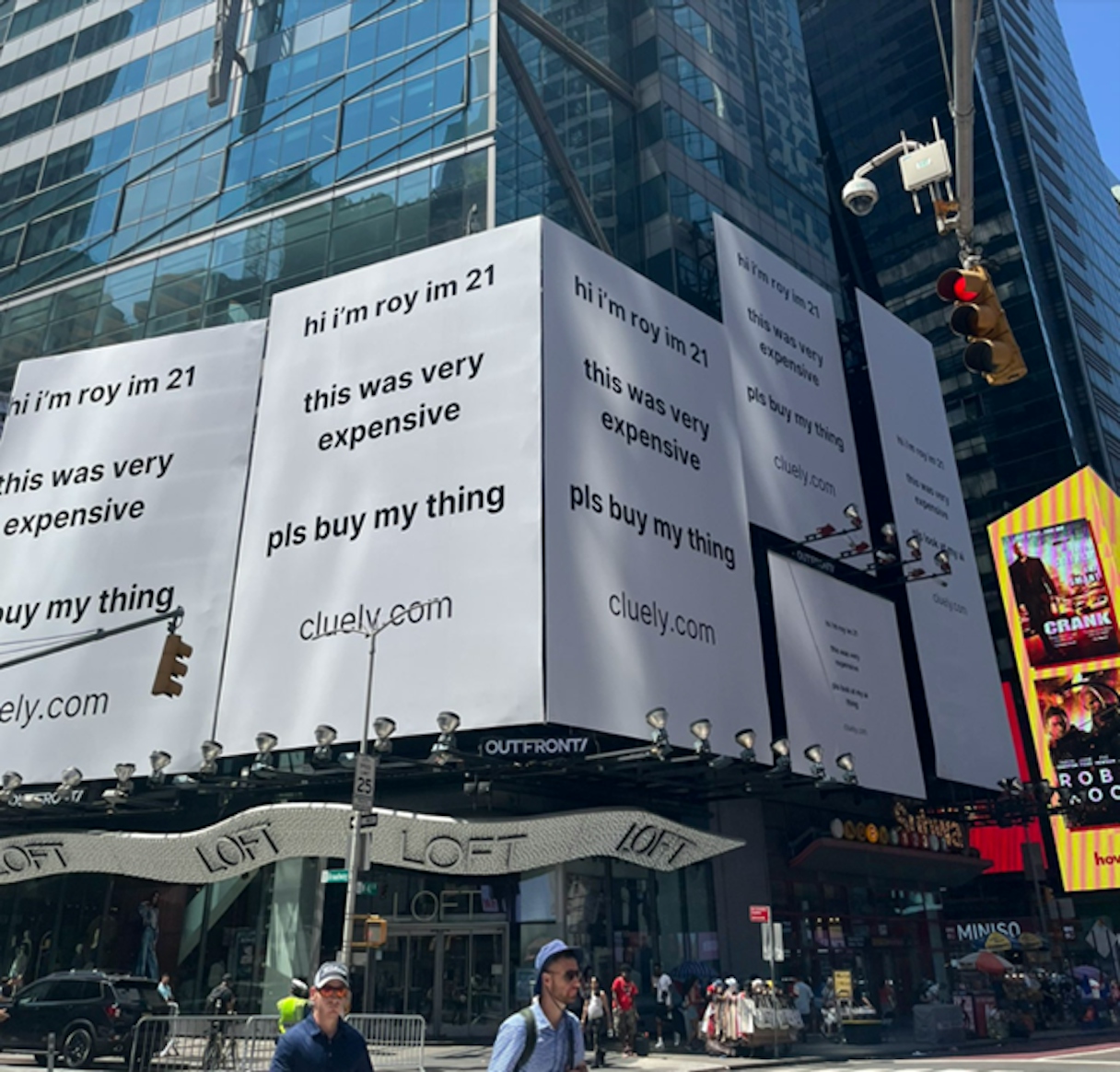
Cluely’s billboards (above) became the story of the summer and a damn good story too. There was a lot of trendy talk about “anti-ads” but, deep down, it was a flagrant exhibition of cost-signalling (“this was very expensive”) which is a sign of a belief in your product.
Rory Sutherland — who dresses like a country squire but is the de facto grandaddy of British advertising — wisely notes: ‘The act of advertising your product is a valuable signal that the manufacturer has faith in its own product — the equivalent to a racehorse owner betting heavily on his own horse’. Their wit made the ads stand out by a country mile.
Best tactical work of the year?
For my money, Gwyneth’s Paltrow’s Astronomer ad.
A brief recap: after Astronomer’s married CEO, Andy Byron, was caught at a Coldplay concert in a steamy clinch (as the tabloids say) with the chief people officer, he was forced to resign. Paltrow became their temporary spokesperson in a video released 10 days later, saying, “We’ve been thrilled so many people have a newfound interest in… data workflow automation.” The result? Over 27 million views in next to no time. A textbook example of turn a PR scandal into gold and — simultaneously — Paltrow seemed less weird than her public image suggests and actually really rather witty. That wasn’t on my 2025 bingo card.
What would I like to see differently next year? First up, the way many ads — especially but not exclusively American ones — pick out celebs, pay them stacks of cash and then thinking it’s gonna be funny all the way, which usually results in a flood of self-congratulatory tosh that lands flat:
Advertisement
(So why praise Paltrow above? Because it’s a tactical ad that has relevance (Paltrow — Chris Martin — Coldplay: geddit?). She’s not taking a stack of dollars to promote peanut butter and chocolate).
The second trend is the wacky-as-funny school of thought. The notion here is you get someone to do something unusual — like have an odd haircut — and you’ve amused the audience and will therefore sell more. Social is packed full of this stuff — here’s just one ad I plucked from the cultural slop-bin.

It has nothing at all to do with what Kinsta actually do (manage Wordpress hosting, since you ask).
Sadly, the big brands are as guilty and they should be big enough to know better. This Wrigley’s Extra ad isn’t from 2025 (it’s from 2022), but it’s a prime example of the wacky-as-funny school.
Advertisement
You can see the thinking here: “hey, silly stuff goes viral, so let’s do that for the kids, yeah?” But it feels spray-and-pray. Do what makes you ding, it tells us; instead, l did what made me skip ad.
All of which said, I’m sure there’ll be plenty to enjoy in 2026. I look forward to covering the hits and one or two of the misses. Many thanks for reading Funny Matters this year: happy holidays one and all.
Paddy Gilmore is the founder of HumourScope: The Humor Consultancy. Using humor intelligently gives brands a clear business advantage — he helps them find this. He can be found on LinkedIn here.