
Will the rise of AI lead to the demise of search? It’s not an either/or question, but zero-click search is a zero-sum game. Let’s unpack what it means for marketers and how it impacts the moment of truth for consumers.

In 2011, Jim Lecinski wrote an ebook called Winning the Zero Moment of Truth.
Zero moment of truth (ZMOT) referred to the moment – on Google, of course – when consumers made their decisions about what product to buy.
It was a riff on the P&G mantra of ‘first moment of truth’ (FMOT), which occurred in store when consumers decided which brand to grab off the shelf.
At the time, search engines had wedged themselves between the store and the consumer as the new MOT in town.
Now, here we are some 15 years later, and AI has inserted itself between search engines and consumers.
When it comes to getting information and making decisions, more and more people are turning to AI agents.
Google, for its part, is capitalizing on this trend with AI Mode on search results powered by Gemini.
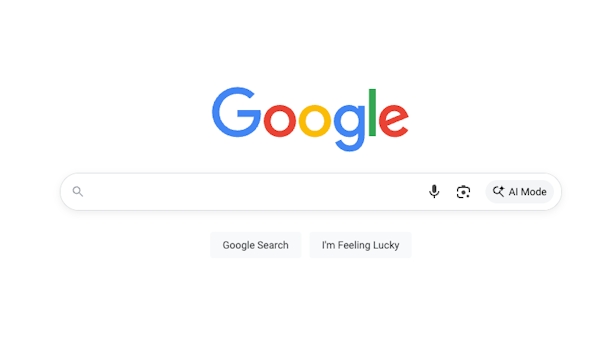
Meanwhile, OpenAI, is disrupting search behavior altogether with ChatGPT and displacing search engines in the process.
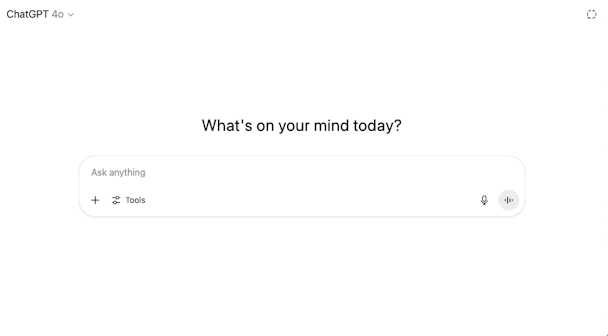
The result is zero-click search (ZCS) and what I’m calling the ‘negative-1 moment of truth’ (-1MOT).
ZCS is when AI summaries appear on the results page, so consumers don’t need to click anywhere else to get their answers.
-1MOT happens any time a decision is embedded in a response from an AI agent.
Let’s see how this plays out for the prompt: ‘Help me plan a trip to Paris for my family in June.‘
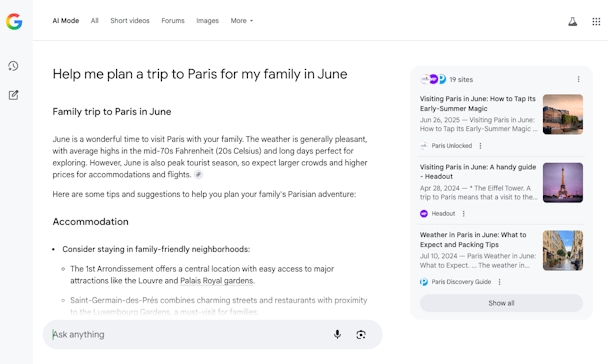
Right off the bat, you can see Google is more commercially minded, getting you to think about accommodations.
It also prominently displays third-party websites you can visit to learn more.
To be sure, those are not paid ads, but it’s not hard to imagine them becoming ads when Google decides it wants to fully monetize AI Mode.
(Don’t forget Google search was started as an ad-free platform, and the founders openly shared their disdain for the ad model propagated by Yahoo.)
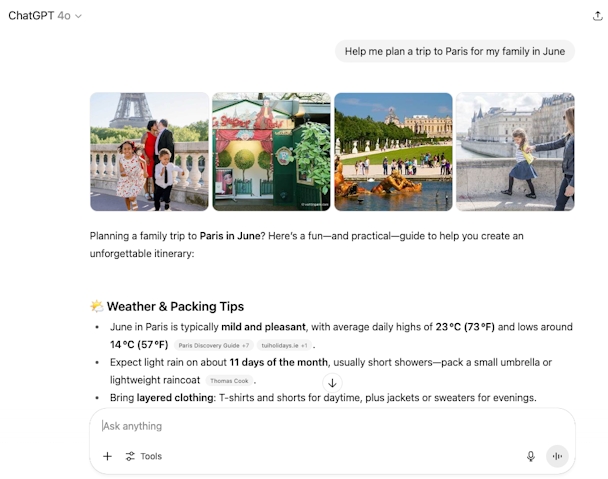
ChatGPT is definitely more of a ZCS play here, with all the content keeping you on the page unless you click the little footnotes.
The images at the top are taken from third-party sites, but clicking them doesn’t send you to the source unless you make another click on the link in the caption.
ChatGPT also doesn’t get into any real commercial information until below the fold, where it lists places to stay and activities to book.
Clearly, OpenAI is more concerned with keeping you engaged with its agent than trying to steer you into a decision that it can monetize.
So where does -1MOT factor in?
Let’s scroll down a bit…
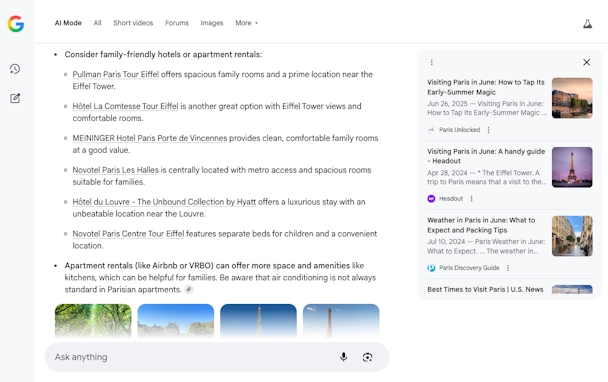
Google offers recommendations for specific properties so, before you even click out to other sites, there are decisions about brands being made.
And the hyperlinks take you to Google Maps listings with lots more information embedded, including paid ads.
This is -1MOT in action.
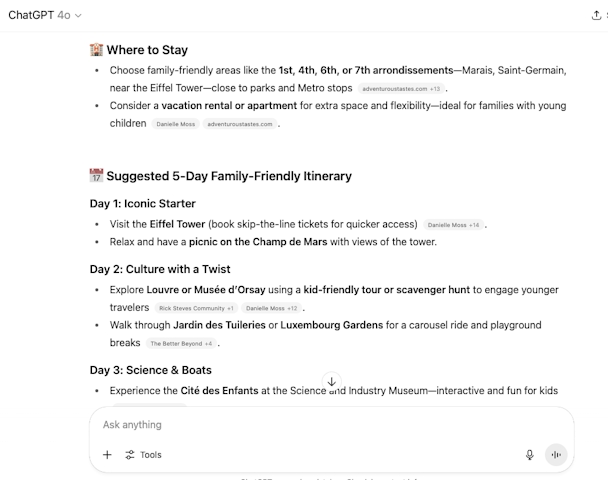
Similar story on ChatGPT – decisions are being made right on the page, with certain locations and attractions winning out.
Now, think about when people use ChatGPT to complete the actions after they’ve made the decisions.
Indeed, zero-click search is a zero-sum game.
And -1MOT can lead to -1ROI.
If only we could agree on what to call the solution – AIO? GEO? AEO?

