


“Listen… I won’t be able to talk about the Interpublic Group/Omnicom merger.” My interview with Javier Compopiano, global chief creative officer at McCann Worldwide (IPG’s flagship agency), is not off to the start I’d hoped.
Like all trade journalists, I’ve followed the year-long mega-merger between the two holding companies. Word is that the dotting of the i’s and crossing of the t’s is almost complete, with the historic deal set to be made official any day now.
I was hoping that my timely sit-down with Campopiano might shed some fresh light on his vision for a McCann under a new parent group. But he quickly manages my expectations.
“One thing I’m terrible at is knowing details in advance of things that are not happening. As a creative person, my policy is to keep my mind as fresh as possible. And if I’m not involved in something… I don’t care until I have that thing in front of me.”
In fact, he tells me that he has been so determined to ensure his creative teams remain focused on the work at hand, rather than “rumors and speculation,” that he has had staff wear sweatshirts bearing the slogan ‘Don’t Get Distracted.’
As blinkered as Campopiano would like to be to what’s going on at a group level, there have nonetheless been distractions. McCann made a round of redundancies back in April and has seen several high-profile executives, including its chief creative officer for the NY office, Shayne Millington, and head of growth, Suresh Raj, leave the business in the wake of the plans. More broadly, IPG cut approximately 2,400 jobs in the first half of 2025 in preparation, while Omnicom slashed its global workforce by 3,000 roles in 2024. At the time of publishing this interview, Omnicom addressed rumors it was sunsetting the DDB agency brand.
“I don’t think people are afraid of change,” says Campopiano of what’s ahead. “People are afraid of what the process of change entails. It’s the transition from A to B. For me, the challenge has been to keep my team focused on the things that are within our control.”
Advertisement
This isn’t his first rodeo. Campopiano joined in 2023 from Grey, where he had served for four years during its problematic merger with AKQA. So, he is acutely aware that “uncertainty is the enemy of creativity.” He doesn’t dwell on his first thoughts when he read the news, just 12 months after landing at McCann, that he was facing more structural upheaval – only this time on a much larger scale. Instead, he keeps his mind laser-focused on what he can control.
“I’ve been trying to spread the message that what we need to do is what we’re doing: servicing our clients, focusing on the work and celebrating the things we’re doing. That makes us stronger for what is next,” he says of how he’s been keeping the ship steady. “It’s not about putting a blindfold over our eyes and pretending that things are not happening. It’s more about how we want to spend the time that we have in this transition, until things are clearer, established and official.”
This is also the approach Campopiano has taken with clients. Rivals at Publicis and WPP have been vocal in their assertions that the upcoming disruption will lead to a wave of new business opportunities as clients avoid potential chaos in favor of stability – a suggestion strongly rebuked by the CEOs of IPG and Omnicom. Campopiano also dismisses the insinuation that clients are spooked by a merger. “We are as busy as we’ve ever been,” he assures.
Indeed, McCann landed LinkedIn’s global ad business just last month, a massive win for the agency. This is all promising at a time when thoughts have turned to which of IPG and Omnicom’s creative brands will survive as the job of consolidating services begins. Although nothing has been officially announced, it has been reported that Omnicom’s BBDO will remain a standalone brand, while DDB and TBWA will merge to form a new entity. From IPG, it has been speculated that McCann will remain as Mullen Lowe is folded into FCB.
Campopiano won’t talk in detail on the future of the 113-year-old McCann moniker, but he does say he’s “confident” that it will “remain one of the most iconic brands in advertising.” It begs the question of whether steering the agency through this landmark moment comes with any added pressure. How does it feel to be at the helm of a creative powerhouse as its future is debated in boardrooms?
In some ways, he says, his short tenure means he’s almost shielded from the weight of the task at hand. “When you think about McCann, you don’t really think of me. I’m not necessarily at one with the brand. However, I do feel privileged to represent McCann and to be the leader. I feel an obligation to keep the things that make this brand… not safe, because safe is offensive… that make it shine.”
Despite his entry into advertising being something of a fluke (he was an IT guy selling Mac computers to ad agencies before one took a punt on his writing skills), Campopiano’s LinkedIn bio namechecks every major ad shop, from his early career at Ogilvy, JWT and Saatchi&Saatchi to leading creative at FCB and Grey.
He took the global creative reins at McCann two years ago and hasn’t sought to reinvent its positioning, but to nudge it “in a slightly different direction” – one that reconnects it with its founding ethos and future-proofs it for what’s to come.
‘Truth Well Told’ is its long-running philosophy, but one that has become more of a meaningless motto than a driving force that permeates every department. Campopiano has spent the last 24 months turning that phrase into an “engine” for creative excellence. He’s used it to change the way its team approaches, judges and promotes its work.
“It was an obsession for me that I’ve tried to instill in everyone in the agency,” Campopiano says. “Every idea must have a ‘truth’ – something impossible to deny. ‘Well’ is about execution; it has to be impossible to ignore. ‘Told’ is about impact; it has to be impossible to forget.”
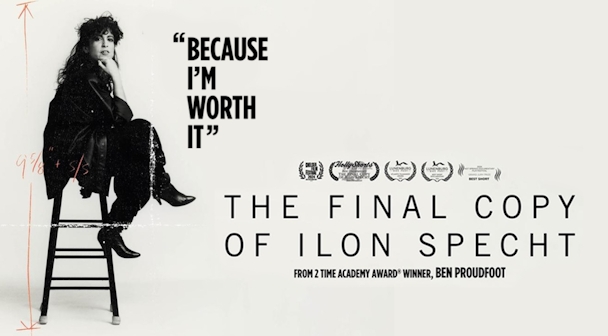
That framework has sharpened McCann’s output and brought strategy and creative closer together. Its recent work for Mastercard, for example, was a refreshed take on the long-running ‘Priceless’ campaign, utilizing Venn diagram visuals to connect universal truths and winning widespread acclaim. Then there’s the film The Final Copy of Ilon Specht, which it created for L’Oréal Paris, paying tribute to the copywriter behind the ‘Because I’m Worth It’ tagline, which went on to win a host of awards at the Cannes Lions festival this year.
“I’m trying to push things as far as they can go. It’s not about just being crazy for the sake of being crazy. It’s about pushing ideas, brands, platforms. How far can we take this? Is this the last frontier for this idea?”
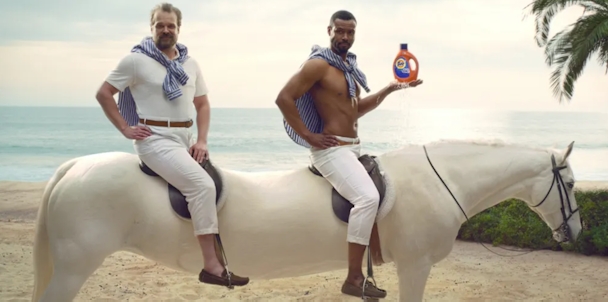
Campopiano admits he’s a big ideas man. The Argentine native excels when working on ambitious, career-defining briefs for global clients. He’s the man behind work such as the multi-award-winning ‘It’s a Tide Ad’ and the ‘Behind Every Receipt, There’s a Great Story’ campaign that Walmart ran for the 2017 Oscars.
Advertisement
But there’s no denying that there’s increasing pressure to deliver work like this quickly, more efficiently, and at even greater scale. And soon, shareholders for what will be the world’s biggest holding company will have all eyes on how every cog in the wheel is turning in a sector that is under mounting pressure. According to its latest results, the total revenue generated by IPG’s advertising and creative agencies, including FCB and McCann, was down 5.9%, standing at $860.5m for the three months ending June 30, versus $914.9m the year prior.
In that respect, IPG and Omnicom have made no secret of the role they believe AI will play in delivering operational efficiencies. Campopiano seems unperturbed by the whole thing and takes the view that AI will free his teams of creatives around the world, not replace them. “If we were just in this game to put content out there as fast as we can, I think that we should all quit. It’s not what anyone is here for,” he says. Client included.
“I have the privilege to work with some of the biggest brands in the world and what I see is a push for better work and a push for less time wasted. But this has always been the case with great clients. They don’t want great talent doing things that great talent shouldn’t be doing. And when you have technology like this one becoming part of the day-to-day, you have fewer excuses not to have the great talent dedicated to what they should be doing.”
It’s here we land on a point Campopiano admits he’s been mulling over for nearly seven years: the remuneration model. Long before AI, mega-mergers and an ad industry in crisis, Campopiano says he knew a shift in mindset was happening and time-based commercial models were no longer serving their purpose. That the value placed on creative ideas and the teams that develop them had to amount to more than numbers on a timesheet. On the media side of the ad business, a move to outcome-based models has been easier thanks to advances in measurement and attribution capabilities. But nearly a decade later, he admits we’re not any closer to solving the problem when it comes to creativity.
“How do we measure the future value of an idea that is born today? There is no way to know that an idea will be a success and it’s going to increase sales X amount, or increase the value of the brand over time, or increase positive sentiment, or any of those KPIs that we use to measure success in our business,” he says.
“But when you know the quality of the people in the companies that you’re hiring, there might be a way to say, ‘OK, the work of these people, the quality of these people, is worth this amount of money for this project. And then if this becomes a success, there will be an incremental compensation.’ With the technology tools we have today, that should be possible. But it’s not easy to change an entire model. It’s expensive to change structures already in place and it’s risky.”
Advertisement
It’s no secret that there are conversations going on in McCann, in IPG, right now on how to evolve remuneration within creative agencies to reflect how AI is upending the agency model, but, as Campopiano points out, there are many actors in this industry that need to align to make change possible.
“Maybe the first big agency or network that gets to that agreement with a big client will set the example for the rest of the industry,” he says.
Until then, Campopiano will continue to “not get distracted” and focus on the job at hand: making McCann shine.
Campopiano has led the judging for The Drum Awards for Advertising 2025. Ahead of the winners being announced at The Awards Festival next month, he shared his thoughts on the work submitted this year.
“It is obvious to say, but the quality level of the entries is so high and the cases so solid that it makes it really hard in the best possible way; no one wants to enter a weak case in this award.
“What surprises me in a really positive way is that the work is getting more and more fun and less serious and even if it is aimed at solving some serious problems, the executions are doing it in a light-hearted way.
“We are going back to use the full palette of colors and tones we have at hand and that is great to see.”