


Born from chaos and supercharged by Amazon, Black Friday has become a month of margin-killing madness. Mark Ritson explains why brands keep falling for deep discounts and why discounting remains the stupidest thing any marketer can do.

It started with cops. Big, hairy, miserable cops from Philadelphia.
The Friday after Thanksgiving in the 1950s was the day every officer dreaded. Downtown flooded with suburban shoppers fresh off the long weekend. These hordes combined with malevolent fans arriving for the annual Army-Navy football game. The weather was appalling. Traffic ground to a halt. Tempers flared in a very Philly ‘hey screeeeeeew you’ kind of way. Shoplifting spiked. Petty crime was rampant. And the long-suffering officers of the Philadelphia PD were forced to work brutal 12-hour shifts with no possibility of leave.
These cops started calling it ‘Black Friday’ – not as a term of celebration, but as an expression of pure, unadulterated fucking misery. The name was born from chaos dressed up as commerce. Which, when you think about it, perfectly describes what now happens every November.
By 1961, local newspaper reporters had appropriated Black Friday for front-page stories in The Philadelphia Bulletin. Merchants hated the term, of course. They attempted to rebrand it ‘Big Friday’ but it didn’t stick. By the 80s, the name had spread across America, though retailers had cleverly reframed its meaning as the day their books went from ‘red to black’ – a moment of annual profitability. That was bollocks, of course. The streets might turn black with people on the titular day after Thanksgiving, but that does not translate to profits, as we shall see.
For decades, Black Friday remained a peculiarly American affair. Europeans looked on with bemused detachment at footage of consumers literally wrestling each other for discounted televisions. We don’t even have Thanksgiving, the British noted. What exactly are we supposed to be recovering from?
Enter Amazon.
In 2010, the Seattle giant brought Black Friday to the UK and everything changed. The first sale was so successful that the website crashed and popular products sold out within seconds. Asda followed in 2013 with in-store sales that produced scenes of genuine mayhem – broken bones, fistfights, and footage that made the evening news for all the wrong reasons.
Advertisement
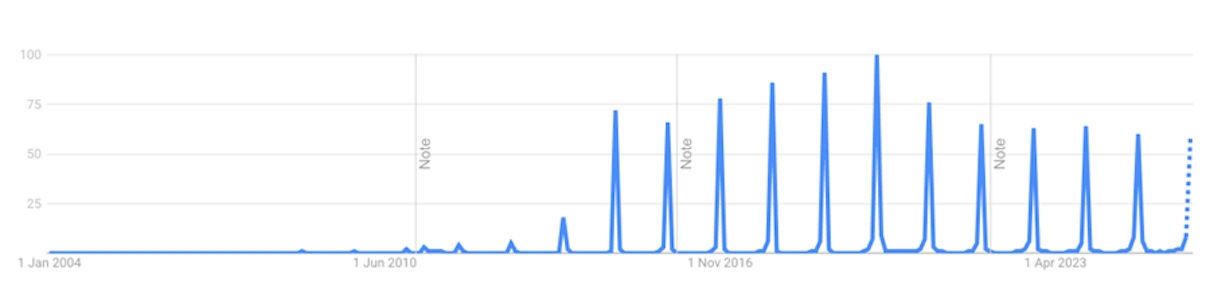
Within half a decade, Black Friday had metastasized from a single American shopping day into what retailers now openly call ‘Black November’ – a month-long global carnival of discounting that has nothing to do with Thanksgiving and everything to do with the strategic imperatives of the world’s largest e-commerce platform. Amazon didn’t bring Black Friday to Europe out of cultural generosity. Amazon brought it because it suited its operational model: high volume, low margin, data capture at scale. Traditional retailers had no choice but to follow. The high street found itself dragged into a price war it didn’t start, couldn’t win, and would prefer not to engage in.
And the deals get deeper, more desperate, and ever more absurd each year. Luxury jewellery brand Missoma has gone “bigger than ever” this year with up to 40% off. Fiat UK is running “Black Friday Offers” with an extra £500 off new cars purchased this week. Boots – who you might imagine should know better – is pushing its biggest Black Friday ever through “better than half price” beauty gifts. Even the banks are in on the game. Santander is offering £200 to customers who switch current accounts, framed helpfully as a way to “boost finances before festive and Black Friday spending”. And retailer Game has dropped its pants almost entirely with 90% off deals. Ninety per cent. At that point, you’re not running a promotion; you’re liquidating with PR.
Despite this orgy of thoughtless discounting, the usual rules of marketing still apply. Price discounting remains the most stupid fucking thing you can do. I am so sure of that claim, and so convinced of its importance, I am going to type it again. Price discounting is the most stupid fucking thing you can ever do.
Let me explain.
Usually, the long, painful list of damage done by price promotions starts with brand equity. Just as advertising builds brands by pushing emotion, benefits and differentiation, discounting destroys them by focusing on product and price just like everyone else. Suddenly, the Fiat 500 isn’t sexy Italian energy with a modern twist. It’s a car that is cheaper to buy than last week. I am prepared to concede that during Black Friday, when almost everyone is discounting and most consumers expect price promotions, this traditional source of brand damage is lessened and may even be nullified. When everyone is drinking martinis, no one has a drinking problem.
But all the other manifest shitfuckery still endures.
Despite the attempt to portray the ‘black’ in question as the colour of the company’s books, nothing could be further from the truth. Thanks to scholars at Wharton, we have known for decades that the single most effective way to drive corporate profits is to maintain a premium price. The reverse logic also applies. If you want to destroy your company’s profitability – ultimately the only thing that matters – just keep running ever-deeper price promotions. Yes, I know discounting drives up revenue. But who cares? Ask the more important question: are these sales profitable? Most companies are lucky to enjoy a gross margin above 30%. You need one hell of a sales surge to justify wiping that out with deep Black Friday promotions.
There is significant evidence that even if you do enjoy a sales spike from your Black Friday exertions, a great proportion of these lower-margin sales would have happened anyway. You sped them up and reduced their marginal value, nothing more. And that means after Black Friday, things go completely black. All those sales you’ve driven forward mean you’re twiddling your thumbs looking at empty stores in December. Merry Christmas.
This is when it gets menacing. Having seen a big sales spike with your discounts, you now sit sadly wondering where all your customers went. Eventually, you have a really bad idea. Why don’t we run another sales promotion? We’ll get another surge like last time and everything will be lovely again. So, you press the big red stupid button again for even bigger price promotions. Because if you want more sales you need deeper discounts than last time, right? And it works. Albeit in slightly lesser numbers. And the vicious cycle of promotional dependence has begun. Before you can utter the words ‘Non-Sale Merchandise on the Fourth Floor’ you have become the JD Sports of your category. There is a reason we refer to discounting as a drug. Marketers get addicted. And when they do, brand equity, then margins, then the business go down the toilet.
Advertisement
Having run a series of discounts, you are in no position to deny your retail network when they come looking for promotional support for the 50th time. When phone retailers approach Apple for special terms, they already know they are going to be told to fuck right off and get back in their box. But you’ve spent the last three months drowning in red tickets, so when retailers ask you, you don’t have a leg to stand on.
Because you are running ever-deeper discounting forays, your competitors get sucked in too. They’re almost as stupid and desperate as you. So they take their lead from your dirty BOGOF behaviour and start running their own rival promotions. Why do you think everyone is now running Black Friday deals? Because everyone else is. It’s akin to what happens when heroin takes hold of a small Midwestern country town. Everyone gets on the brown and things quickly turn to shit.
And as you and your competitors battle to destroy your brands and reduce margins faster than each other, the consumer spots the pattern. Almost all your merchandise is now sold at a special price. The small, pathetic number of products marked ‘Not Part of the Sale’ in the corner of the store are only a temporary exception. Everybody knows it. You have effectively trained the whole category to ignore the proper price, wait for deep discounts, and stock up accordingly. Congratulations. You have totally fucked your brand, your profits, your business, and your category.
Advertisement
Much as I would love to suggest a solution, the hard reality is that everyone gets fucked on Black Friday. The companies that discount end up destroying their profitability and long-term brand appeal. The rarer ones that try to avoid or minimise promotional activity lose enormous volumes as their less disciplined idiot rivals destroy the profit pool.
All too often in this industry we find brand naming is done poorly. Not this time. I have to hand it to the men and women of the Philly PD. 70 years ago, when they came up with Black Friday, they nailed it. A special time of the year when brands darken their fortunes, profits and long-term business prospects with appalling shadow of over-done, over-run promotional activity.
Black Friday. A perfect name.
Mark Ritson is inviting entrants to his MiniMBA in Brand Management for the class of April 2026.
This is Mark’s 13th The Drum column. Have you read the other 12?