


When even the UK’s most trusted ‘money man’ has to put out videos disavowing social media ad scams, you know you’re just seeing the tip of the iceberg. Following reports 10% of Meta’s ad revenue comes from such ads, an incensed Mark Ritson asks why marketers are not holding Meta to account.

There he is. The mighty Martin Lewis, Britain’s most trusted money man, sat in what appears to be his home office. He’s turned his attention away from ISA rates and toward crypto, explaining why Elon Musk’s new Quantum AI project is the “investment opportunity of a lifetime.”
The lighting is perfect. The voice uncanny. His blue sofa the exact shade you remember from a dozen ITV appearances. If you’re over fifty-five, male, and spend your days Googling “best pension drawdown rates,” this ad has been algorithmically selected just for you. Just click, enter your bank details, and watch the returns roll in.
Except, of course, the whole thing is fraudulent bollocks. Martin Lewis has nothing to do with it.
Musk isn’t involved.
There is no investment scheme.
The video is a deepfake, stitched together by criminals using AI to mimic faces and voices with terrifying accuracy.
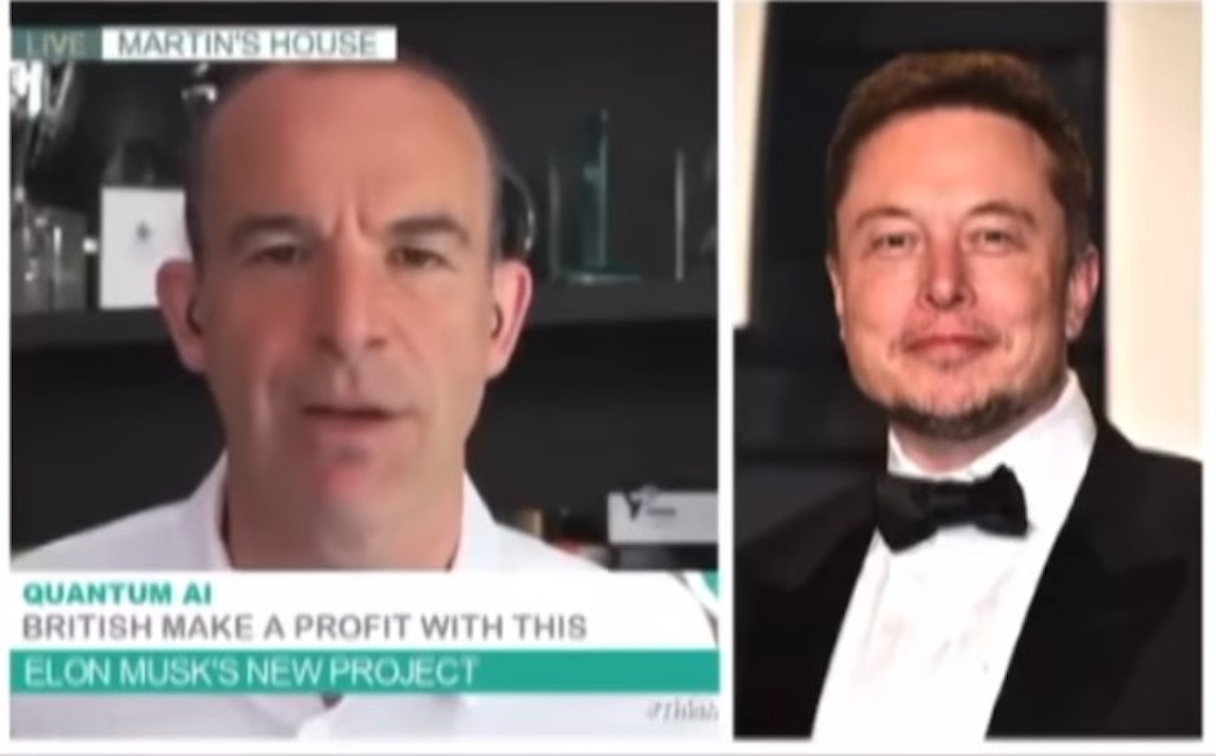
And what makes this properly terrifying is that this scam ad doesn’t lurk on some desperate digital media fluttering at the margins of the dark web. It’s an Instagram ad. The content may be criminal, but the media context is entirely legitimate. Legitimacy that helps the dodgy content pass the sniff test and deliver its fraudulent ROI.
Meta, owner of Instagram, must surely be concerned about fraudulent advertising appearing across its network, right?
Advertisement
Right?
According to leaked internal company documents obtained by Reuters, the Martin Lewis fake crypto ad is part of a sprawling, systematically enabled fraud that accounts for roughly 10% of Meta’s annual advertising revenue. That’s approximately $16bn in 2024 alone, from fraudulent ads that should never have been created, served, or clicked on. That’s a revenue stream comparable to McDonald’s annual global profit.
Meta’s platforms serve users an estimated 15bn “higher risk” advertisements every day. Yes, day. In the two minutes since you started reading this column, 22m of them have been distributed. The “higher risk” terminology is the company’s internal euphemism for content showing signs of fraud. And if you’re unlucky enough to click, Meta’s personalisation algorithm helpfully decides you must be interested in more of the same, flooding your feed with further opportunities to be robbed. Martin Lewis even had to take to national TV to warn people that he offers no investment or crypto advice.
A Meta memo from April 2025 concluded, with almost admirable candor, that “it is easier to advertise scams on Meta platforms than Google.”
Who said relative differentiation was hard to achieve?
Another internal document estimates Meta’s platforms are now involved in around a third of all successful scams in the United States. It’s worse in the UK where the Payment Systems Regulator found that Meta’s platforms were linked to 54% of all payment-related scam losses in 2023. More than every other social platform combined.
The Reuters investigation, which unearthed documents from Meta’s own finance, policy, engineering, and safety teams spanning 2021 to 2025, paints a breathtakingly cynical picture. The company’s automated enforcement systems only ban advertisers if they’re at least 95% certain the marketer is committing fraud.
Fall below that threshold?
Meta simply charges you more money to keep running your possibly fraudulent ads.
Why the 95% reluctance rate?
Internal documents reveal Meta placed explicit “revenue guardrails” on its trust-and-safety teams. Despite estimates that ten percent of revenues derive from fraudulent ads, enforcement teams are restricted to actions costing the company no more than 0.15% of total revenue.
The mathematics of moral bankruptcy: Most fraudulent advertising on Meta’s platforms not only gets through, it keeps getting through.
Small advertisers need to be flagged for financial fraud at least eight times before Meta blocks them. According to Reuters, some bigger spenders racked up more than five hundred strikes without being shut down. Because 10% is sixty-six times greater than 0.15%.
Meta spokesman Andy Stone insists the leaked documents “present a selective view that distorts Meta’s approach to fraud and scams,” describing the 10% revenue estimate as “rough and overly-inclusive.” Stone, who declined to provide a “less inclusive” estimate, should pull the other one because it has fake AI bells on it.
Stone failed to address the internal documents that also show Meta anticipates annual regulatory fines of up to a billion dollars for scam ads. A sum described internally as comfortably smaller than the revenue earned from fraudulent advertising. When the fine for robbing a bank is a tenth of the robbery’s value, it’s time to rob banks. Assuming, of course, robbery causes you no moral concern.
Advertisement
“It is ridiculous that the current government and the past government have never had the balls to take on Big Tech and their scams. They have not properly regulated them,” Martin Lewis (the real one) recently observed. “They have not done what they need to do; which is make it more expensive for them to publish these scam ads with huge fines and huge levies against them if they do, than they make from making advertising so easy that anybody can put their adverts on, which means scammers can put them on with impunity”.
Despite the Reuters investigation emerging a month ago and Lewis talking about this issue for more than two years, it has sparked relatively little industry debate. Marketers love to talk about brand safety, trust, and the sanctity of consumer relationships. They commission earnest reports, attend umpteen brand purpose conferences, and nod gravely whenever someone mentions “ethics.” But presented with one of the largest and most egregious revelations in years most say and do precisely nothing.
The reason isn’t complicated: Meta controls so much of the modern advertising ecosystem that agencies, media buyers, and brands are terrified of biting the hand that feeds them. The entire industry is structurally incapable of meaningful criticism because livelihoods depend on staying in Zuckerberg’s good graces. Meta isn’t just too big to fail. It’s too big to fault.

That uncomfortable reality was laid bare last week. UK creative agency Insiders developed a billboard campaign for #IgnoredByInsta, designed to highlight Instagram’s abject failure to protect its users from scams, hacks, and identity theft. The billboards mirrored Instagram’s own outdoor advertising but swapped aspirational lifestyle imagery for glitchy distortions, threatening DMs, and the automated error messages victims receive when trying to recover stolen accounts.
But the billboards never ran.
Media buyers refused to display them, citing concerns they “don’t want to look like we’re supporting the message” because “Meta is a client.”
Let that sink in: an advertising campaign about how Big Tech ignores victims was silenced by the advertising industry for fear of upsetting Big Tech.
Jonny Stanton, the Instagram scam victim who launched the campaign, called the outcome “extraordinary.” Stu McFadden of Refundee observed that “every day, more people are being scammed or impersonated and often the scammers start on social media. Victims report through official channels and get nowhere.”
Advertisement
The marketing ecosystem is structurally bent in favor of the giants. And those giants are morally vacuous and rarely forced to account. The agencies that should hold platforms accountable are too financially dependent to do so. The brands claiming to care about consumers are too busy optimizing cost-per-click to ask uncomfortable questions about where their ads appear. And regulators, despite rumbling about billion-dollar fines, have yet to impose penalties approaching the profits at stake.
Meanwhile, somewhere in Meta’s ad-serving infrastructure, the algorithms keep humming, targeting their next mark with exquisite precision. That Quantum AI opportunity remains out there, waiting. If you want to invest your life savings in fictional Musk’s fictional project endorsed by fictional Martin Lewis on his fictional sofa, there has never been a better time to click.
In a prime postmodern moment, the real Martin Lewis continues to warn people via Instagram about the fake AI Martin Lewis, also on Instagram, trying to fleece them for thousands. Victims like Des Healey, who lost seventy-six thousand pounds after clicking a deepfake Facebook ad, continue searching for answers.
And Meta? Meta gets paid either way.
Mark Ritson is inviting entrants to his MiniMBA in Brand Management for the class of April 2026.
Have you read Mark’s other The Drum columns?