


If The Drum’s HR manager is reading, please note that the following is not a resignation letter. However, an hour-long interview with Sadira E Furlow, the chief brand and marketing officer at Tony’s Chocolonely, left me wanting to blow up my life.
I walked away wondering if I should jack it all in to run a café-bookstore-florist. Or maybe I could pull the kids out of school to become one of those digital-nomad families. You see, Furlow has done this. Well, not the floristry business or the RV-living thing. But she has blown her career up. More than once. And each time, emerged with an intoxicating clarity of purpose that left me dangerously certain that I could emulate her.
That said, Furlow’s decision to enter the advertising trade started with what might be one of the worst decisions I have ever heard. On track to become an orthopaedic surgeon, she was gearing up to take the MCATs (the notorious Medical College Admission Test) and needed a job while studying. That job was an account executive at Leo Burnett Chicago.
“I only made it half a semester at Northwestern. No one told me that being in an agency means work doesn’t end at 5pm,” she laughs.
It didn’t work out.
And when faced with the choice between a salary or the pursuit of medicine, she walked away from the years spent dedicating herself to getting an MD to, ironically, run the Philip Morris Marlboro account instead.
“[There] I discovered the power of creativity. It sounds a bit generic, but for someone who was wired towards science to now be in a creative space, it felt like going into the magic black box of how a brand comes to be. That you could use creativity to solve problems and get people to change behaviour… it became a drug.”
Furlow then spent 15 years on the agency side, leaving Leo to join Upshot and then Common Ground Marketing, where she managed the Miller drinks portfolio and eventually became the agency’s vice-president.
Then, following her medical career ‘blow-up,’ another. She quit and left the agency world altogether. “To be candid, I was pissed off,” she says of the decision.
Her first experience at Leo, which had been Philip Morris’s agency since 1954, was the purest form of client-agency relationship. She says she was a partner in managing the brand and given an equal voice in how it should present itself to the world. By the time she left, the industry had changed from that true partnership model to something beyond recognition. “I saw it go from being about the magic of creativity to procurement getting in the mix and the... commodification of creativity. And I thought, no, not all agencies are created equal. Ideas are not created equal. How can you pay the same in that way?”
The final straw was a client asking for more “innovative thinking.” With that came the realization that CMOs were the problem: “All agencies do is provide innovative ideas, but your ability as a client to shepherd them through the system so that what goes out the door resembles what started as magic is the problem,” she says. “I’d had enough. I didn’t want to do another negotiation or a scope of work. But I thought I could be the kind of client that I had when I came into the industry and more effectively drive a better outcome creatively.”
Advertisement
So, Furlow started again, making the move client-side, landing at PepsiCo to run marketing for Mountain Dew. Her five-year tenure also saw her take on the CMO role for North America Nutrition and then VP of marketing for the $5bn Frito-Lay portfolio. She broke the internet with the ‘puppymonkeybaby’ campaign (above), forged brand deals with hit TV show The Voice and LA Lakers’ star Anthony Davis, and led the highly successful launch of LifeWtr. In short, she was at the top of her game and, without doubt, being groomed to take on the top, career-defining marketing job at Pepsi.
“But I had this fear that I was becoming really strong at doing marketing in a way that worked very well for PepsiCo or big CPG,” she says. New tech, AI and emerging business models were not, back in 2020, part of her daily mix. “I said, if I stay and continue to do this, I have an amazing opportunity, but I will be limited in the kind of marketing I can do.”
Again, she strayed from the path she was on. While PepsiCo colleagues were leaving to run global marketing for top brands, including Fabiola Torres, who went to Gap, Furlow moved to a little-known fintech brand called Happy Money. “It was one of those brave career leaps where you bet on yourself and go for the unobvious thing,” she says. “I knew that even if it went to crap, spending two years [at a startup] was going to leave me a better marketer than if I stayed at PepsiCo.”
She ran Happy Money’s fully remote team on what was, compared with PepsiCo, a shoestring budget before she decided to take an eight-month-long career break. If you look at her LinkedIn profile, Furlow lists her achievements during this time off: “Becoming a golfer, cooking, traveling”, she writes. In reality, she spent the better part of a year wrestling with her confidence, motivation, and uncertainty over the future.
“What I anticipated would have been a very joyful time was actually quite depressing. One of the things that made me so good at my job was being a high performer, the output and the outcomes I drove. When your primary KPI has been productivity, the self-judgment of not being productive…”
Doubts about her competency then crept in. “You start to question yourself,” she admits. “Maybe I’m the problem. Am I being lazy? Am I just not motivated enough? I looked at what my friends are doing. There was a lot of self-criticism. I had to learn that this time was about patience and rest. And as a Black woman, it feels like there is risk in rest. If I’m resting, what if I can’t get back in? Someone else is going to outperform me. When I’m sleeping, they’re working.”
Furlow credits an executive coach for guiding her through this time, for realizing that responding to burnout and taking time to recalibrate is an essential part of any high performer’s strategy to sustain success.
“I spent that season doing what I didn’t anticipate - a lot of internal work that I didn’t even know I needed. And it allowed me to come out on the other side knowing what I wanted the next chapter ahead to look like and that I wanted to work around the way I wanted to live.”
That break set her on the path to becoming chief brand and communications officer at Tony’s Chocolonely. “I wouldn’t have been able to see it for what it was – exactly the job that worked for me professionally and personally. It might have seemed too small.” It’s also no coincidence that she emerged from this period of self-reflection and joined a mission-driven company.
“I’ve got a strong work ethic. I’m great for culture. And if I’m going to use my gifts and talents, I want to be using them in the service of something that is energizing, that brings me meaning and a sense that I’m leaving something better,” Furlow explains. “Give me that commercial goal every year, because I know I bust my ass to do that. But I also want to know that it is leaving people better.”
Furlow has been at the helm of Tony’s Chocolonely marketing for two years.
Her first objective is simple: sell more chocolate. The more it sells, the more beans it can buy through Tony’s Open Chain, paying West African cocoa farmers a higher price. The second is bolder: asking competitors to also source beans through Open Chain.
“We are an impact company that makes chocolate, not a chocolate company that does impact,” she says. “That statement is internalized in everything we do. This isn’t about Tony’s winning; it’s about changing the industry. We can’t do that alone,” she says.
But that open invitation creates tension.
“There are moments where I’m looking at my brand tracker thinking, ‘If I help them win, it makes my job harder, ’” she admits.
Advertisement
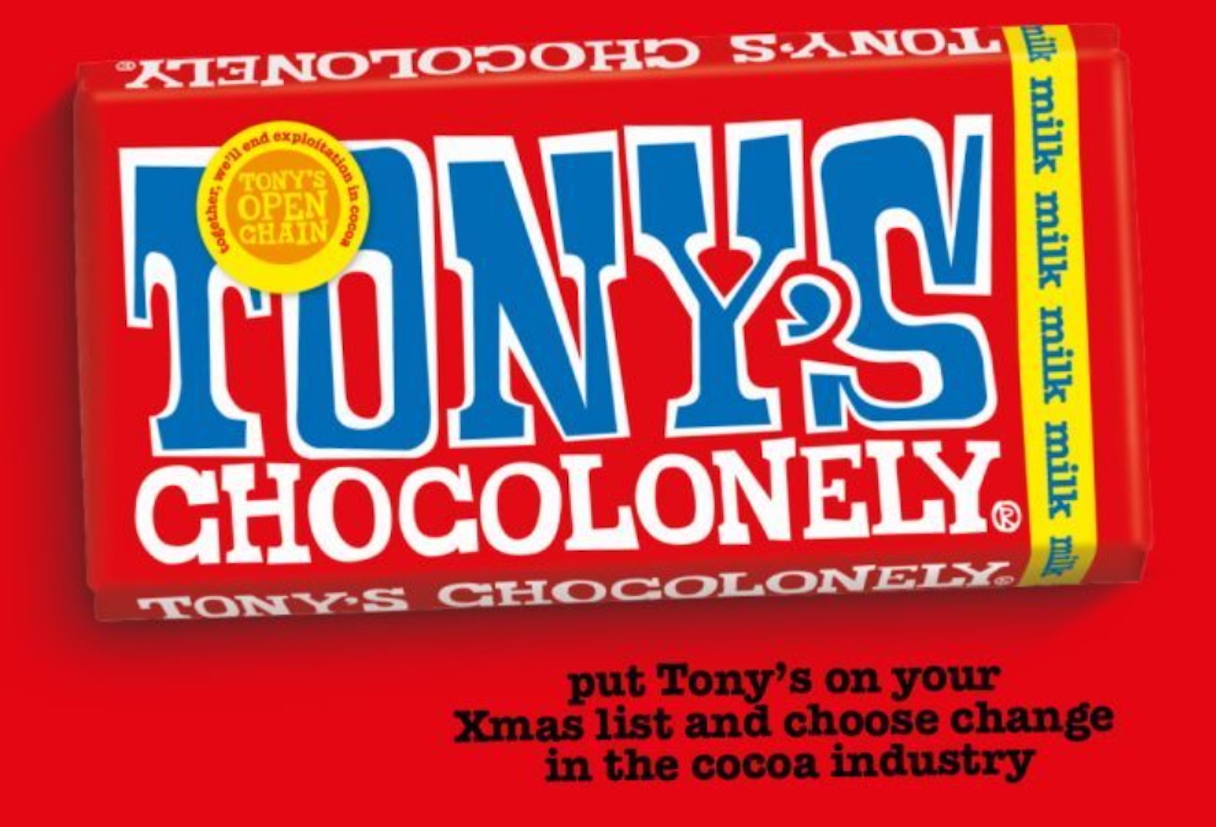
In the past, competitors were pressured to join the mission after brand campaigns publicly exposed injustices in cocoa supply chains and put a spotlight on specific companies. But Furlow has steered a tonal shift, away from naming and shaming and towards inclusion.
“We were known for poking the industry,” she says of the change in tactic. “We’re still trying to tell that story and raise awareness, we’re being objective and factual, but also doing it in a more positive way. It’s more impactful to be less ‘it’s your fault’ and more ‘here’s how we’re changing it. We’d love for you to be a part of it.”
Furlow is refreshingly candid about her marketing budget.
While competitors might spend anywhere from nine to 13% of their revenue on marketing, Tony’s rarely exceeds 3%. Rather than seeing constraint as a limitation, she looks at it as fuel for creativity. “There’s a belief that more money solves everything. But I’ve been places where I’ve had all the money in the world and it still didn’t feel enough for the things that we needed to do,” she says. “The constraint has driven better marketing stewardship of the choices we make because we have to be so in tune with our consumers, we can’t get distracted. It definitely drives a creative entrepreneurialism in solving those problems.”
Most of Tony’s spend goes on partnerships, organic social, and earned media. Still, she recognises the need to scale. “I’m not asking for the same budgets as competitors. I just need a bit more to reach more people, more often. Awareness is the key to impact.” Soon, it will launch its first-ever TV campaign after landing £500,000 of media space from the Sky Media UK Footprint Fund.
And, of course, Furlow is leveraging all her experience on the agency side to extract the maximum value she can from her adland partners who work alongside its in-house creative team.
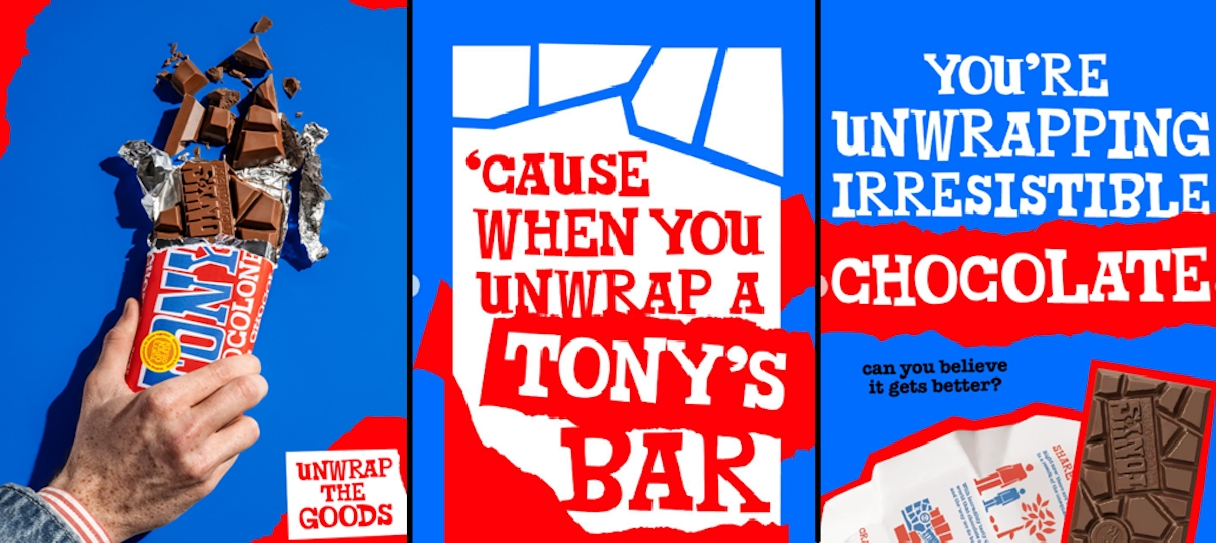
Unlike at PepsiCo, its lean budgets mean she doesn’t work with a traditional agency-of-record model. Instead, she’s got a roster of ad shops in the UK and US that she can tap for key moments. UK agency Who Wot Why and US-based Motive are examples of collaborators who “get” Tony’s. “Motive helped us launch Unwrap the Goods in the US (below) – one of our best-performing campaigns. It told the mission and chocolate story together, in a way that made sense for American consumers.”
Advertisement
Dual accountability is important to her, part of her commitment to be a better client. Furlow won’t stand for agency-bashing or blaming among her marketing team.
“We are equally responsible for the success of our agency relationships,” she adds. “If we don’t get great creative, I ask: was the brief good? Did we set them up to succeed? This isn’t transactional. The best work comes when we both feel responsible for getting to something great.”
The US is Tony’s fastest-growing region, but it comes with its own challenges. “There’s mission fatigue in the US,” Furlow explains. “Everyone’s got a purpose. There’s scepticism and a lack of trust. So we can’t lead with the mission – we lead with chocolate.”
For that market, taste and design are the entry point. The mission offers the staying power. Transparency is another differentiator. “We acknowledge we cost more – and explain why. That honesty builds credibility.”
And finally, she’s shaking up its partnership strategy. There’s no shortage of brands keen to lean on Tony Chocolonely’s brand equity. And in the past, it was only too happy to hand that over.
“When I joined, we didn’t have a partnership strategy. We were just like: ”OK, who wants to work with us? Great, we’ll work with you.”
Now there’s more discernment as she’s helped Tony’s leadership realize that working with the brand has to come at a cost. “It’s unsexy, but so important. We now have criteria of what makes the right partner for us,” chiefly, brands that will cement Tony’s place in culture and provide some entertainment value. Just take the huge deal it inked with Ben & Jerry’s ice-cream to co-create a product, or its new partnership with Pantone to certify the iconic ‘Tony’s Red’ colour of its bars.
“We’re scaling and have had to get really clear that not every call is a call we want to answer,” she says.
Furlow was named one of The Drum’s Rebel 50, a roll call of the boldest, bravest and most unapologetically rebellious marketers reshaping the industry today.
When asked how she practices that in her role, she says: “What is popular is not always right, and what is right is not always popular. At Tony’s, we’re not trying to win a popularity contest.
"The way that everyone else does things, even if they’re right, to me, feels rebellious, and that shows up on everything from our packaging, where our colors are different. We want to earn the attention, not buy the attention.”

Tony's Chocolonely
Tony’s Chocolonely is an impact company that makes chocolate, committed to ending exploitation in cocoa. And not just the cocoa in our chocolate, but in all chocolate...