


Think UK TV advertising could save the BBC? Andrew Tindall does the maths, the answer is a resounding no.

BBC HQ (Adobe Stock)
Allowing ads on to the BBC won’t save public broadcasting but it would kneecap the UK TV ad market, alienate viewers, and still leave the BBC short a couple of billion pounds. Which is why Lisa Nandy floating the idea isn’t bold thinking. It’s just economic illiteracy and a clear undervaluation of the role advertising plays for the UK.
Getting the obvious out of the way, this isn’t a serious proposal. It’s a desperate political signal. Look busy. Look tough. Throw the culture secretary to the wolves and hope no one does the maths.
On the surface, the argument sounds reasonable. Netflix, Amazon and Disney all have ad tiers now. Viewers tolerate ads. Ireland’s RTE has always been ad-funded alongside a smaller licence fee. So why not the BBC?
Because the BBC has spent the last decade insisting it is not commercial. Its entire value system is built on independence from advertisers. Trust. Distance from market pressure. Public service first. You cannot U-turn on that without detonating the brand. Netflix isn’t the Beeb. If an ad popped up just as they’re about to find a Chippendale sideboard on Cash in the Attic, half the country would riot. My mum would lob her bangers and mash at the telly.
Advertisement
But forget philosophy. The only argument that matters here is money.
The BBC licence fee brings in roughly £3.8bn a year. UK broadcaster TV ad revenue hit about £4.4bn in 2024, with VOD just creeping over £1bn for the first time. That ad economy supports tens of thousands of jobs and generates hundreds of millions in tax.
There is no magic pot of new ad money waiting for the BBC. Brands do not suddenly “find” billions. All that would happen is redistribution. Money would be dragged out of ITV and Channel 4 and funnelled into the BBC at the exact moment TV is already under pressure.
Despite being one of the most effective long-term brand-building channels we have, advertisers have swallowed the digital Kool-Aid and are steadily shifting spend away from TV. Adding the BBC to the ad market would not revive broadcasting. It would be another boot on the neck of one of the UK’s hardest-working media assets.
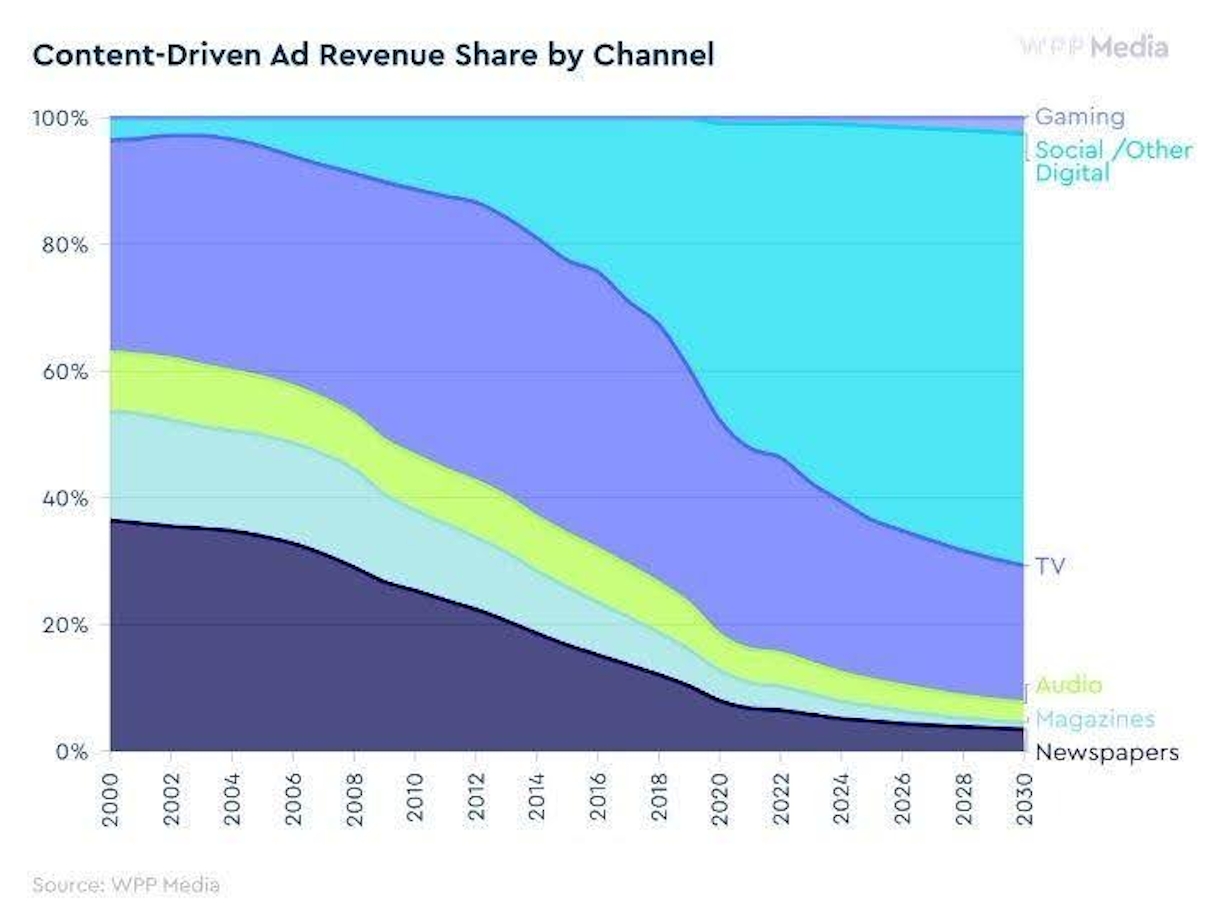
And that’s before you get to how media even works.
To protect viewers, the BBC would have to cap ads at around seven minutes an hour. That works out at roughly 250,000 30-second spots a year across all its channels.
If the BBC wanted to raise £1bn from advertising, it would need to charge around £4,000 per 30-second spot. Across everything. Peak drama. Daytime antiques. Family Guy repeats at 4am.
Advertisement
To replace the full licence fee, you’re talking closer to £15,000 a spot. Prime-time prices, all day, every day. Even the back-to-back This Country repeats on BBC’s niche channels would need to carry that price tag.
Brands would not buy it. Not at scale. Not without a vast commercial sales operation persuading them that BBC graveyard inventory is suddenly premium. You’d need an entire building of media professionals to make it work.
But the final media reality check is ITV. A genuinely world-class commercial broadcaster, staffed by people who actually understand advertising.
ITV returned to growth last year and still only generated around £1.8bn in ad revenue in 2024.
Advertisement
The idea that the government could casually turn the BBC into the most successful advertising business in the country, hoover up half the licence fee from the same advertisers, and do it without wrecking ITV, Channel 4, or the BBC itself is fantasy. Anyone could work that out on the back of a fag packet after three Guinness in the pub.
Why is advertising so consistently misunderstood by people in power?
Advertising is not a grubby bolt-on. It funds British culture, pays for content and keeps commercial media alive. Treating it like an infinite, consequence-free money tap is how you collapse the system that pays for television in the first place.
You don’t fix public service broadcasting by destroying commercial broadcasting. And you definitely don’t do it by insulting the intelligence of an industry that already understands the economics better than you do.