


From total TV’s next act and a sponsorship-heavy year to the reshaping of search and the limits of AI creativity, 2026 is about measuring real impact, not promises, says Analytic Partners’ Joy Talbot.

2026 is about measuring real impact
As 2026 comes more sharply into view – bringing high-stakes live moments and AI-led search experiences into focus – the ‘old ways’ of measuring success are hitting a wall. Marketing is being asked to commit across environments where visibility is growing but certainty is not.
Here’s how the next 12 months will play out, and where the biggest opportunities – and traps – lie.
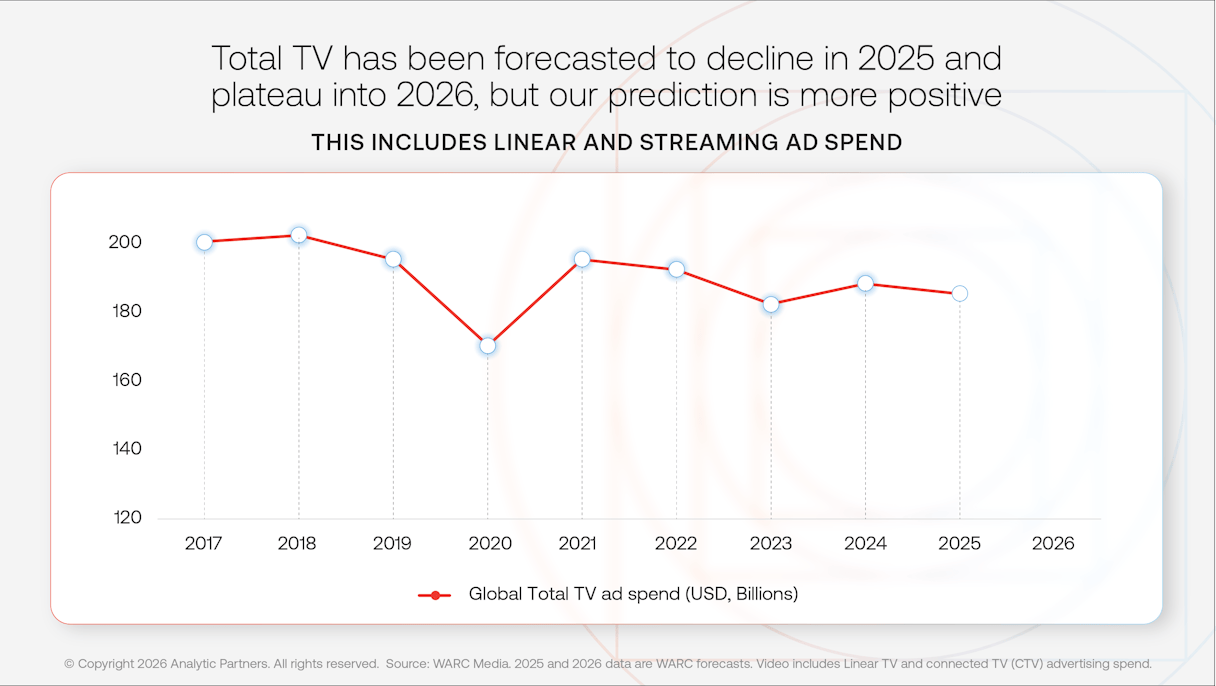
Linear TV continues to decline, with WARC forecasting global linear ad spend to fall to $139.1bn in 2026, its lowest level since 2005. At the same time, costs across premium video environments remain under pressure, making efficiency harder to come by.
This doesn’t mean that viewing has disappeared, though: audiences have simply shifted to watching BVOD and on-demand TV on connected screens. Big sports events like the Super Bowl and ‘water-cooler’ programming like The Traitors still command mass attention when content creates genuine fear of missing out.
Advertisement
But this type of viewing is more about concentration, not scale: fewer moments, higher stakes, and a growing need to plan Total TV as a cross-platform attention strategy rather than a legacy channel buy. The challenge for marketers? Proving the value of influence delivered across an increasingly fragmented TV ecosystem.
Alongside annual tentpoles like the Super Bowl, 2026 welcomes the Winter Olympics and a Men’s Football World Cup of unprecedented scale. For the FIFA World Cup 2023-2026 cycle alone, we’re looking at marketing and sponsorship rights of around $2.7 billion, according to the Sponsorship Marketing Association.
But scale alone won’t guarantee returns. Take the Super Bowl. While it delivers enormous reach in a single day, analysis consistently shows that advertising ROI is 75% lower on average than with other marketing activities.
Brands that extract real value from sponsorships will treat them as a cross-channel platform opportunity, not just a placement. PR, social amplification, point-of-sale activations and strong creative strengthen the impact of your event campaign beyond the moment itself. When executed well, integrated campaigns can drive 4-5x greater impact beyond the short-term, according to Analytic Partners’ ROI Genome®.
Google’s introduction of AI Overviews to search results over the last year-and-a-half has been a seismic shift in the world of search. Brands are already seeing reduced engagement with traditional ads pushed below AI-generated responses – not because demand has disappeared, but because behavior has changed.
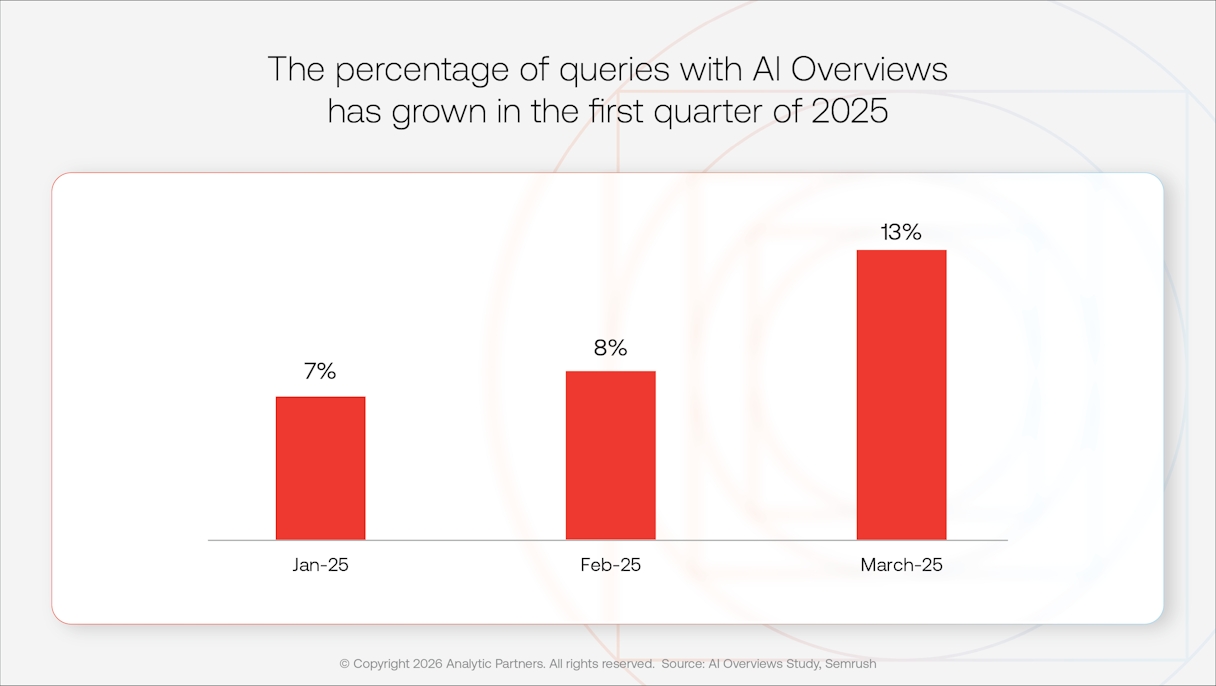
Ads are now appearing within AI Overviews, using existing Search, Shopping and Performance Max (PMax) campaigns where Google determines commercial and/or intent relevance. But this is where tensions emerge. PMax’s growth has come with persistent questions around transparency, cannibalization and true incremental value.
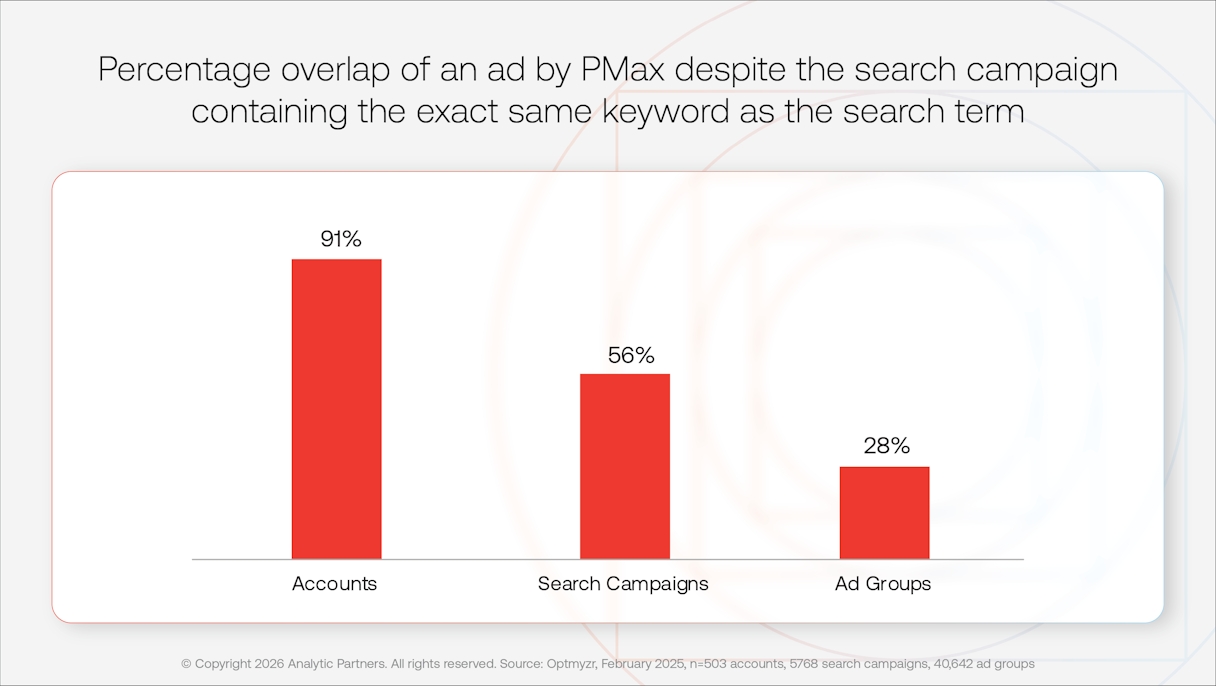
AI Overviews will amplify these concerns, not solve them. Optimization will increasingly favor visibility and presence over clearly attributable clicks, making justification and decisioning harder.
In 2026, success in search will come from understanding how AI-led search moments contribute to both brand and performance, not just last clicks. The winners will be the ones who can measure what influence, exposure, and assisted impact truly do for the business – across search and the wider commercial ecosystem.
We’ve seen how content creation and production have been impacted by AI over the last year – from synthetic voiceovers to automated format adaption.
Advertisement
Most recently Coca-Cola’s 2025 ‘Holidays Are Coming’ ad features the famous Coca-Cola trucks in a festive setting, all created using GenAI tech. But, while audiences accepted the tech, there was a backlash over major visual and creative flaws.
And here’s the deal as to why well-constructed creative is so important: good creative outperforms poor creative by 2.5x, as shown in our chart from Analytic Partners ROI Genome ®.
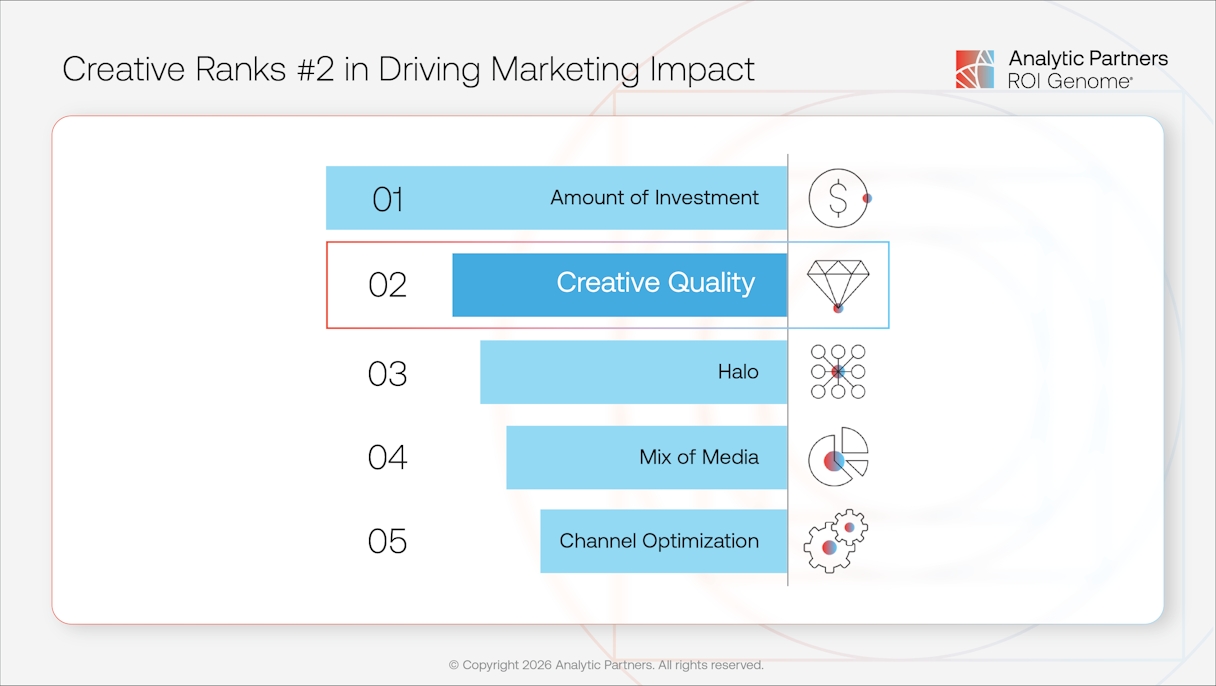
AI may make us feel the feels, but it often still struggles to nail broad-beam features (rich in story, characters, and expressions) that impact us in the longer term. Similarly, AI will likely remain less able to drive the same level of distinctiveness via brand assets as a skilled, real human marketer can.
That’s why, in 2026, the brands that succeed will use AI to amplify strong ideas, not compensate for weak ones.
As AI reshapes media and content, interest in human-led channels will continue to grow. Influencers, creators and real-world brand experiences will remain powerful because they deliver credibility at a time when automation dominates.
Advertisement
But there’s still a significant variation in performance by platform, size of influencer or product category that leaves a bad impression if not handled and measured correctly.
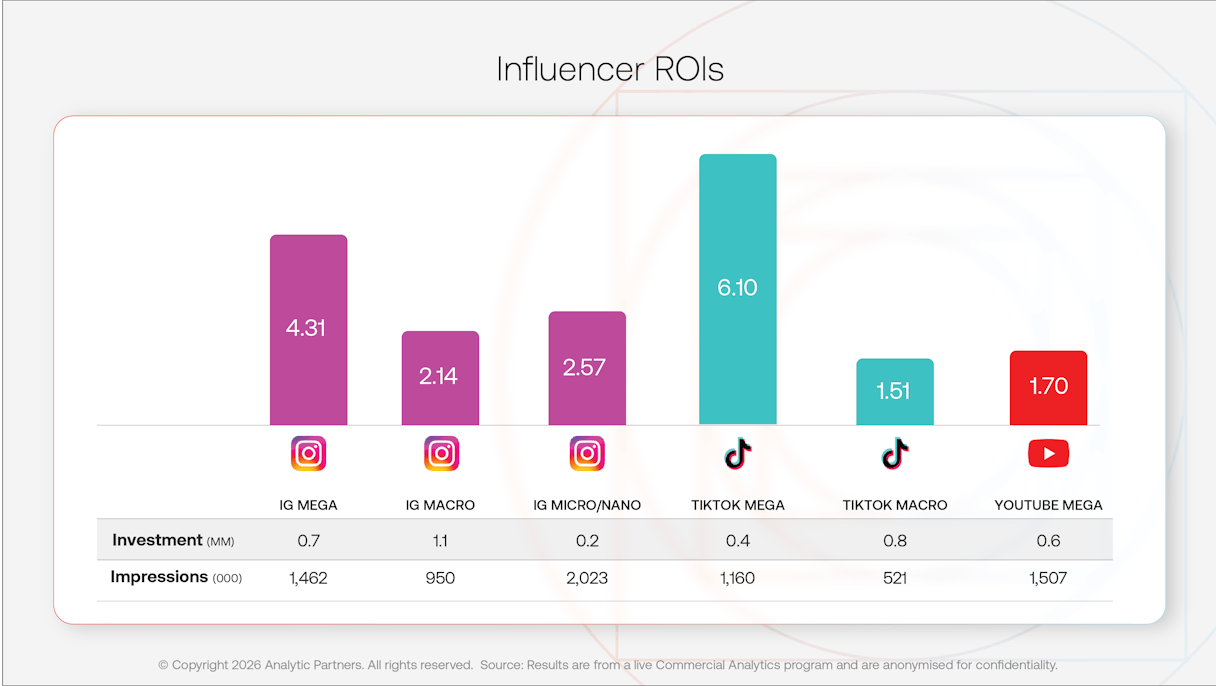
So, to get the most of their influencer investment, brands will need to make sure their influencer strategy is aligned with their commercial goals and will measure incremental performance and optimize over time.
Ultimately, the real shift in 2026 isn’t where brands invest – it’s how decisions get made. As media, search and creative continue to fragment, marketing leaders are facing more questions at a time when many of those changes make measurement harder. In that environment, credible impact becomes more important than ever. And it comes from analytics that connect marketing activities to commercial outcomes, enabling confident decision-making across all functions.
In that context, commercial analytics becomes less about reporting performance and more about powering enterprise decisioning – turning complex signals into clarity for the business.
Analytic Partners
Analytic Partners is the leader in Commercial Analytics. Our platform, GPS-Enterprise provides adaptive solutions for deeper business understanding, right-time planning,...