


Andrew Tindall, armed with months of System1 research, reveals that despite what we people say, they can’t tell if an ad is made with AI, nor do they care when it is. This piece is a clear green light to brands they use AI tools in their advertising.

This year and last, there has been no shortage of controversy surrounding Coca-Cola’s use of AI in its Christmas ads, with one The Drum columnist focusing on wobbly truck wheels. Coca-Cola’s European CMO, Javier Meza, was dismissive of such criticisms on stage during a panel with The Drum at the Web Summit this week: “Mistakes happen. Just fix them. Move on.”
So who is right? Should we just ignore AI wobbles? If we notice, surely consumers do too? Right?
In 2024, the main industry critiques of the Coke work were: “AI is ruining creativity,” “It’s soulless,” “The robots have taken Santa.” Yet when System1 tested it, people loved it. It scored 5.9 Stars, right up there with the best holiday ads of the year, predicting huge long-term effectiveness.
This year, it’s become a serious topic in adland as more and more creatives seem to be using AI, as I shared in The Financial Times this week. But what’s really curious is that Coca-Cola doubled down with AI work that scored just as well in our creative testing with the public.
And I'm not just talking about gen-AI Christmas cartoons here. There is serious work being done. This gen-AI Volvo ad (spec work from a fan of the brand) is one of the best car ads we’ve tested in the past few years. Despite what your creative mate tells you at the pub, how everyone hates this stuff, people are loving these ads.
That should be all the proof you need that the backlash brigade on X doesn’t speak for the public. Emotionally, this ad works. It’s even distinctive, scoring top marks in fluency. And Coca-Cola (which invented modern Christmas) saw such commercial success that it is doing it again, whether you like it or not.
That little mystery, how audiences respond so warmly to work they claim to hate, is what led me to run the first-ever analysis of generative-AI advertising, working with Jellyfish’s Tom Roach and System1’s Test Your Ad. Alongside a boatload of real humans to get the first glimpse into the effectiveness of generative AI advertising. Beyond Daily Mail headlines.
Advertisement
I’ll tell it straight: consumers can’t tell if something’s made with AI until prompted. And even when they do work it out, despite what they may claim, it doesn’t really impact their emotional response to advertising. It works and consumers don’t mind; meanwhile, marketers and AI can only get better. It would be irresponsible to ignore these findings.
This is a small study, so you may apply a small pinch of gen-AI salt to my outlandish claims, but I’m so convinced by the results, I had to go and write this column.
We tested 18 AI-generated long-form ads from the US, UK, and Australia, measuring 2,700 people’s second-by-second emotional and branding responses through System1’s Test Your Ad.
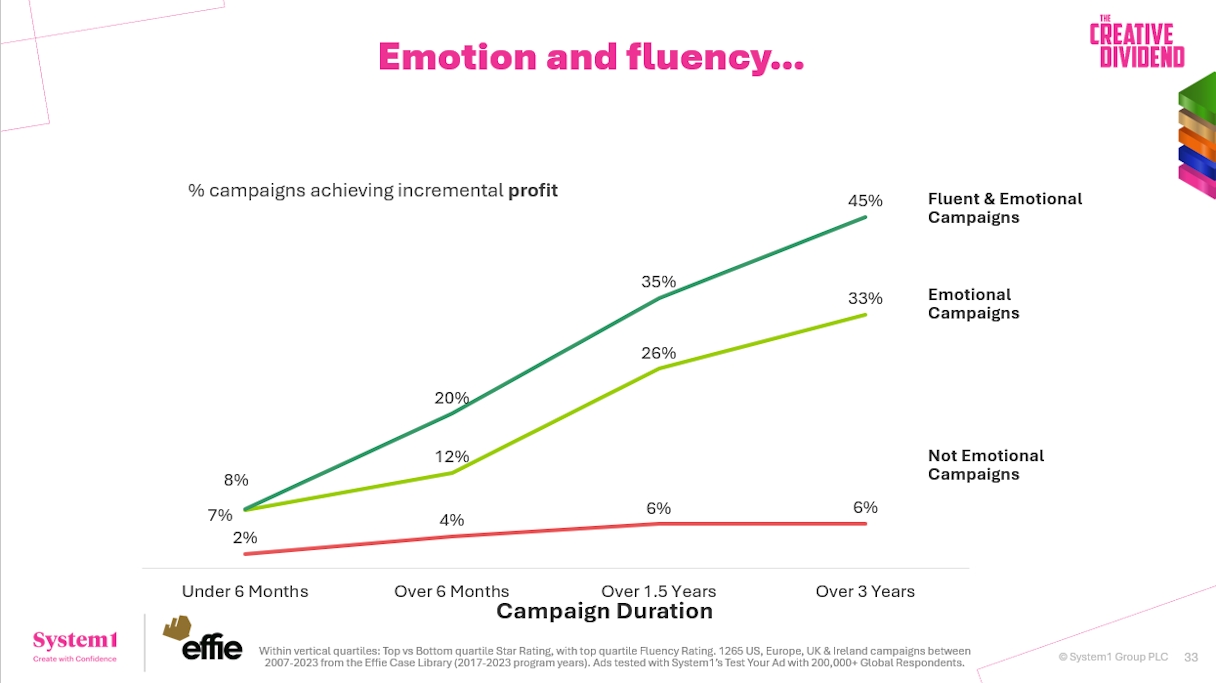
We’ve combined the Effie Worldwide case studies with our data previously to show how our emotional and fluency (distinctiveness) combine to select the work that truly works. Both are important for profit growth. Note the irony here, we must use the human emotional response to advertising to predict the impact of non-human ads…
After watching, respondents were asked two simple questions:
For those who don’t regularly conduct research, let me explain our questioning. Note that we did NOT mention that AI was involved in the production until after respondents scrutinized the production. That way, no biases or pre-conceived notions could taint their answers.
When people aren’t prompted about AI, they can’t tell the difference. Only 24% of viewers described any ad as “digitally enhanced.” Most said they looked “like a typical, professionally produced ad.”

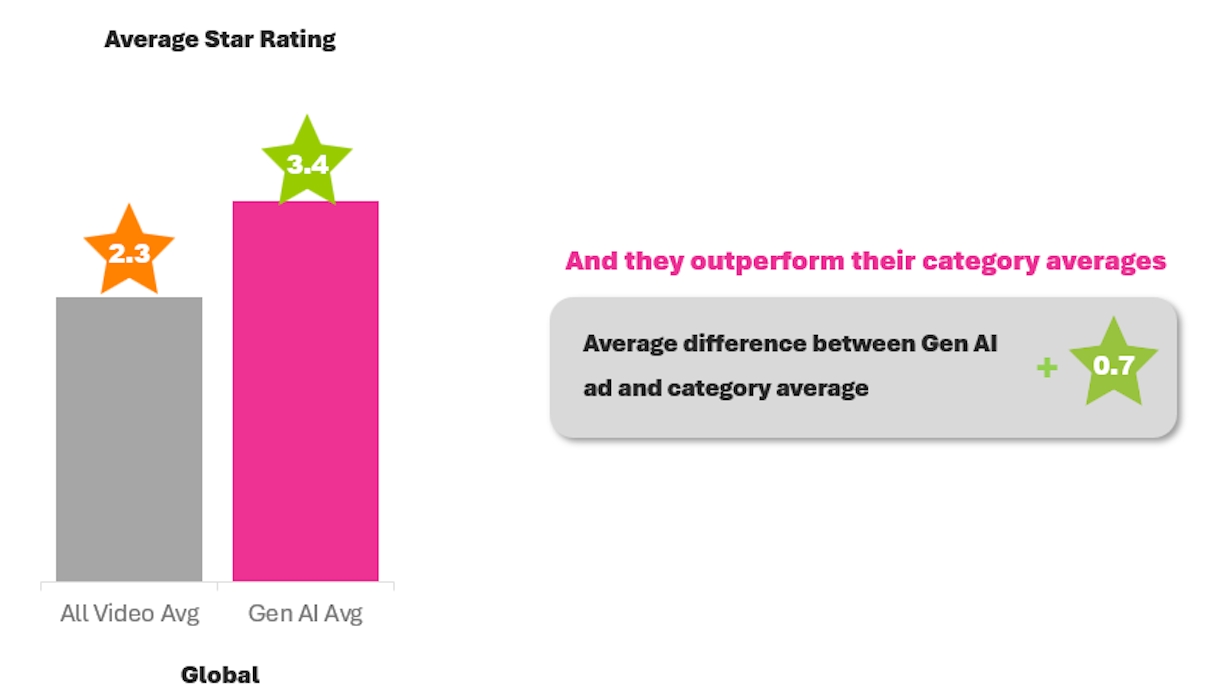
Even more surprisingly, although a small sample, the average emotional score for gen-AI ads is higher than the global average. Normal ads average 2.3 Stars; and the gen-AI ones score 3.4 Stars. Even when comparing them to their specific category, they see nearly a whole 1-Star emotional lift. This predicts much larger share growth.
This shouldn’t be surprising. As Mark Ritson pointed out last week, humans keep making questionable advertising. Of course, it’s possible that a human switched on enough to give gen-AI a go might be making better than average work.
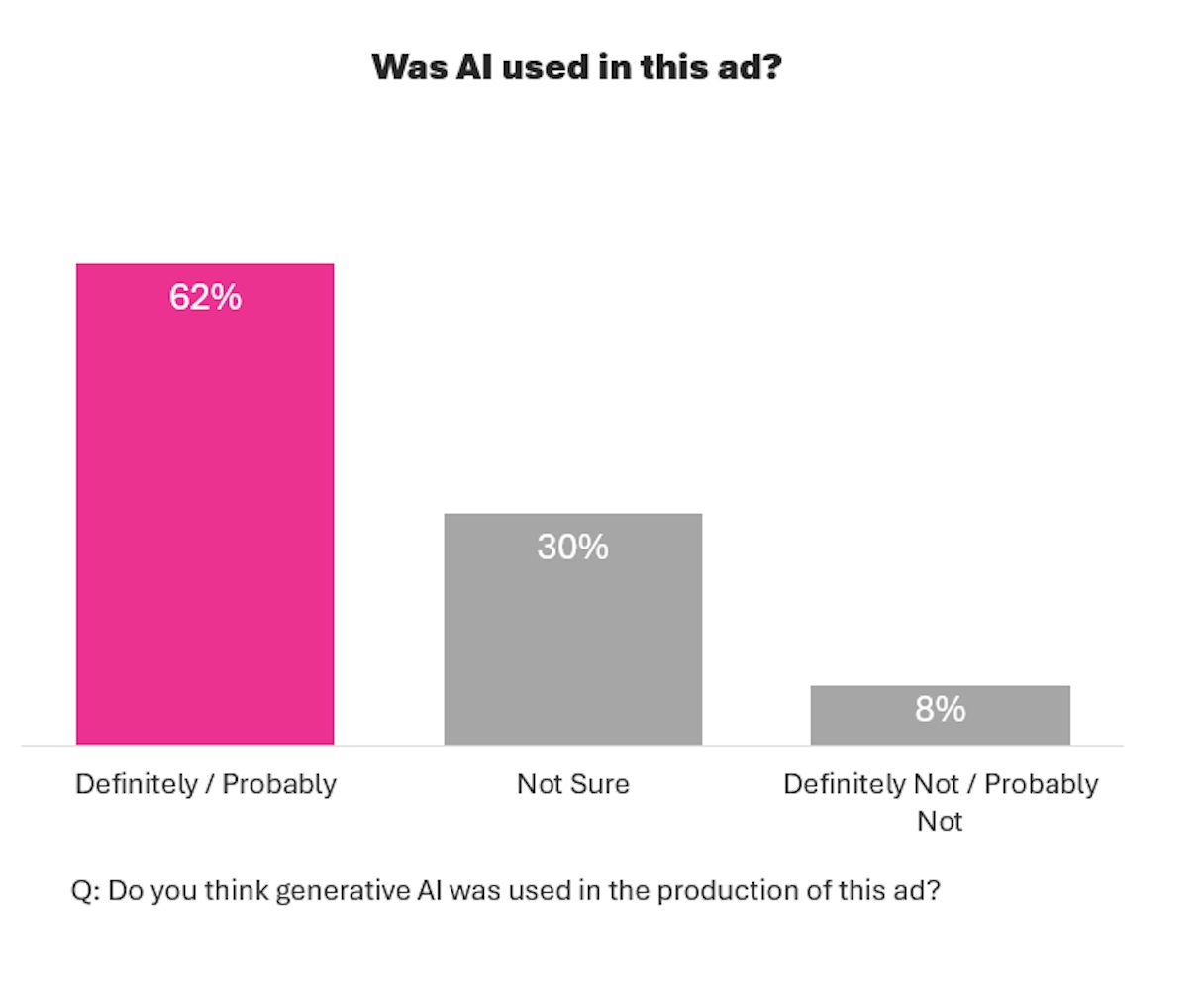
Once we explicitly asked if AI had been used, 62% suddenly said yes. Human nature. We like to sound informed, especially about scary tech. Why would they ask about AI if it wasn’t used, they may suspect.
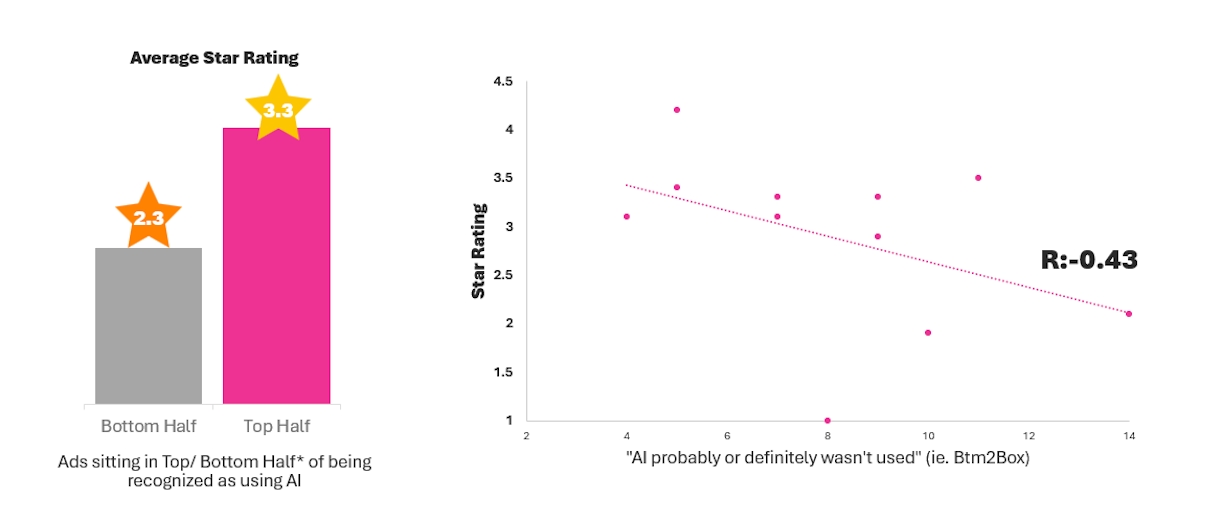
This is the magical part: the ads people specifically called out for being more likely to be produced by AI actually created significantly more emotion. And the more people didn’t think AI was involved, the lower the Star Rating. This is a very small sample, but a clear pattern is emerging, a hypothesis we will test over the coming year.
Advertisement
It’s system 1 vs system 2 thinking.
People will rationally tell you they hate the use of AI in ads but when you look at their emotional response, that’s just not the case. The fear that audiences will “reject” AI advertising isn’t supported by this data.
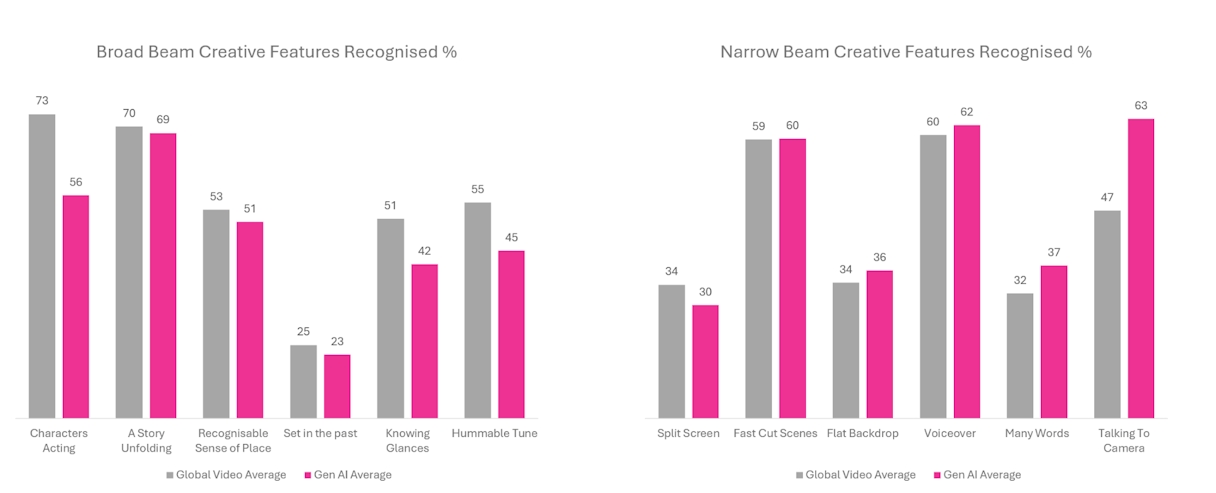
Where AI does fall short is in creative style. Orlando Wood’s research on the left and right brain is pretty widely accepted now. Entertaining “Showmanship” advertising featuring characters, human expression, and stories create more emotion and captures more attention, building lasting brand effects. With more “left-brained” advertising doing the opposite.
Real humans recognized fewer of these broad-beam creative features in the gen-AI ads, and often more narrow-beam features, which capture in-market demand while struggling to create future demand.
Despite the lack of negative emotional impact, there's still a huge gap in the creative quality of gen-AI ads.
AI can churn out pictures and words fast, but only skilled creatives and marketers know how to create more human work to build future effects. AI needs us more than we need it; it’s a tool for human creatives to use properly.
Advertisement
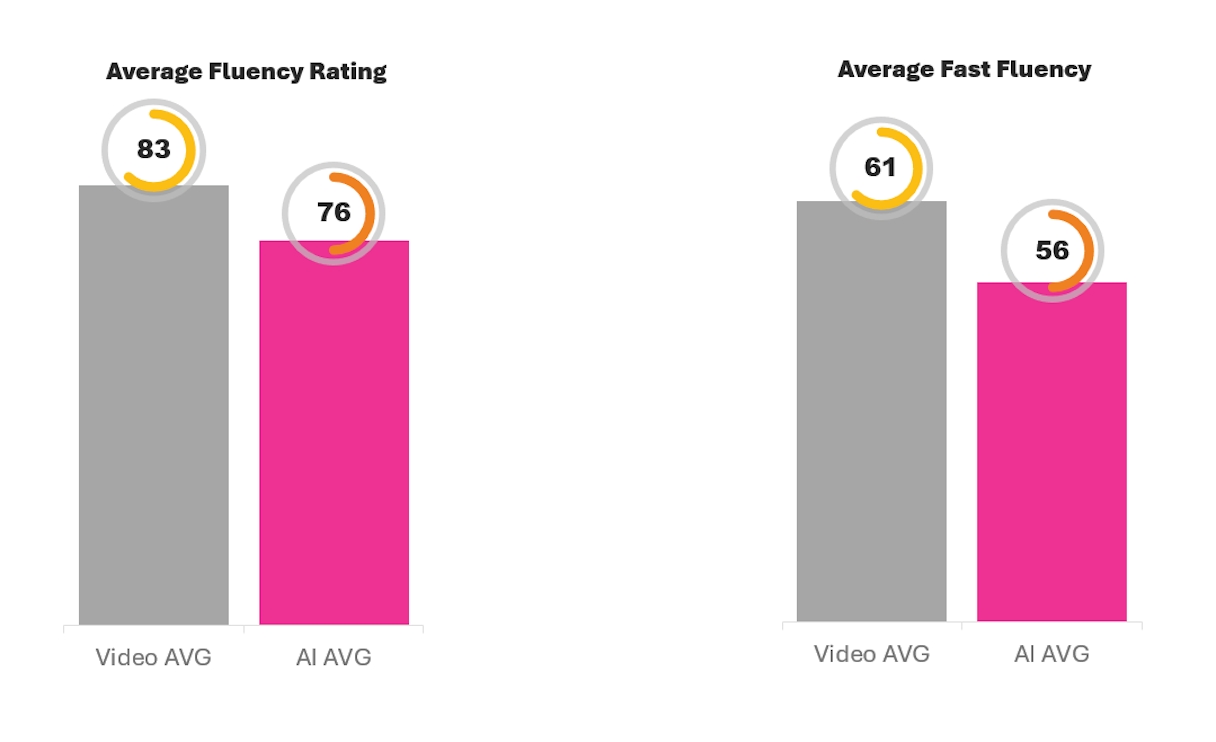
There’s a more glaring problem. AI clearly doesn’t think, and it certainly doesn’t think in campaigns, it doesn’t know our brands, and it’s not Jenni Rommanuik: it doesn’t know anything about distinctive brand assets. The gen-AI ads lack distinctiveness, especially the ability to brand fast in advertising. Which is increasingly important as skippable media grows in popularity.
The most brilliant example is the ever-impressive marketing team at Ikea. They’ve built a strong range of unique and famous distinct assets (fonts, colours, products) and use them excessively in their ads. Watch how they bring that together in their brilliantly fluent work below.
Now watch that fan-made viral Ikea gen-AI ad that everyone lost their minds over on LinkedIn. Which AI gurus hailed as exceptional. They just about remembered to use a logo. In testing, only 49% of people thought this ad was for Ikea. It’s a flop, not excellence.
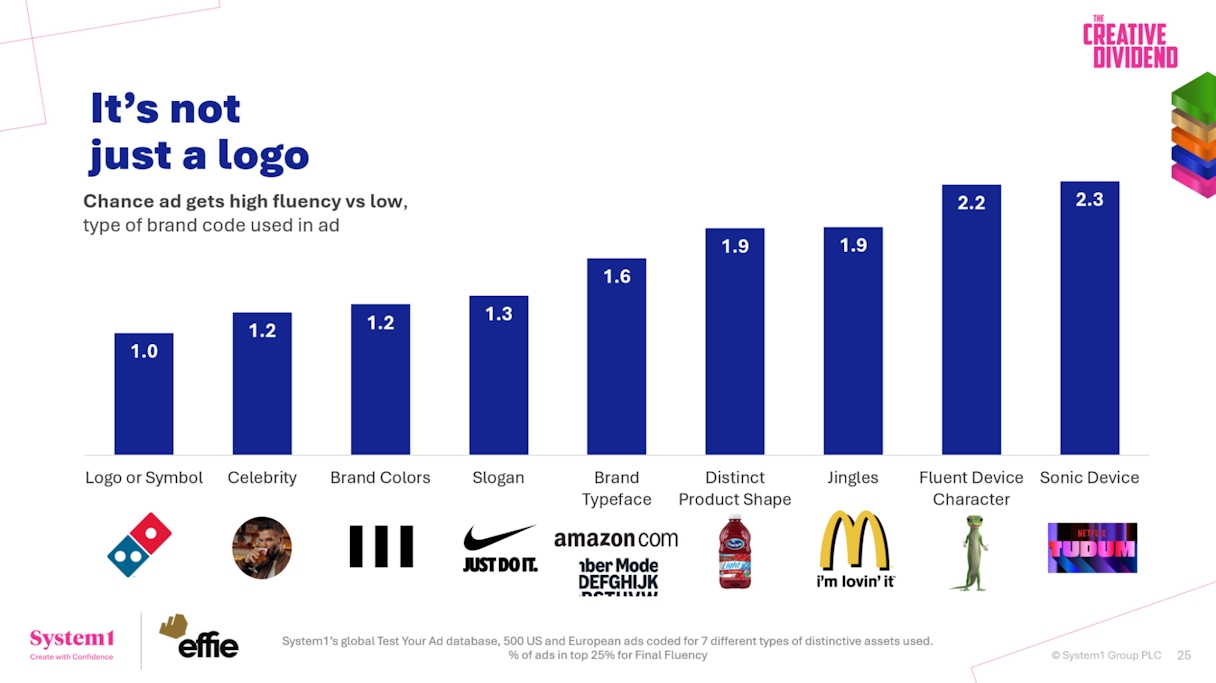
AI doesn’t know that a logo is one of the weakest ways to increase the chance of high ad distinctiveness, it doesn’t care about the Effie x System1 research we launched at Cannes with Prof Ritson, fellow columnist. It makes the pictures you tell it to.
Just like emotion is useless without underlying strategy and brand positioning work. Emotion is useless without brand recognition and distinctiveness. We must cool our jets.
AI isn’t a properly trained marketer or creative. It’s a production tool that’s quite challenging to manage.
Advertisement
There’s a huge opportunity here. Right now, consumers do not know if AI has been involved in work. And when they do, despite what they might say, they don’t care.
We shouldn’t judge ads from what a few thousand say online when prompted. But from what the millions feel when they see an ad.
If we can get gen-AI into the hands of properly trained creatives and marketers who have their strategic eggs in a row. And they use their expertise to ensure the work is human, entertaining, and full of “right-brain” creative features. To create ads that evoke a strong emotional response while executing everything we know about distinctive brand assets. And these are some big ifs. Yes, gen-AI ads can create brand-building, effective advertising.
Just like Coca-Cola worked out last year.
Editor’s note: Here is access to a handful of the more interesting studies from the study, as well as a link to watch them.

System1 Group
System1 is The Creative Effectiveness Platform that quickly harnesses the power of emotion to drive profitable growth for the world’s leading brands. Our Test...

Coca Cola
Coca-Cola, or Coke, is a carbonated soft drink produced by The Coca-Cola Company. Originally intended as a patent medicine, it was invented in the late 19th century...