
With the announcement from OpenAI that ads on the platform are imminent, here’s a look at what led up to the launch and what marketers should expect going forward.

On January 6, I made a prediction in Ad Age: “OpenAI will begin testing advertising inside ChatGPT in 2026.”
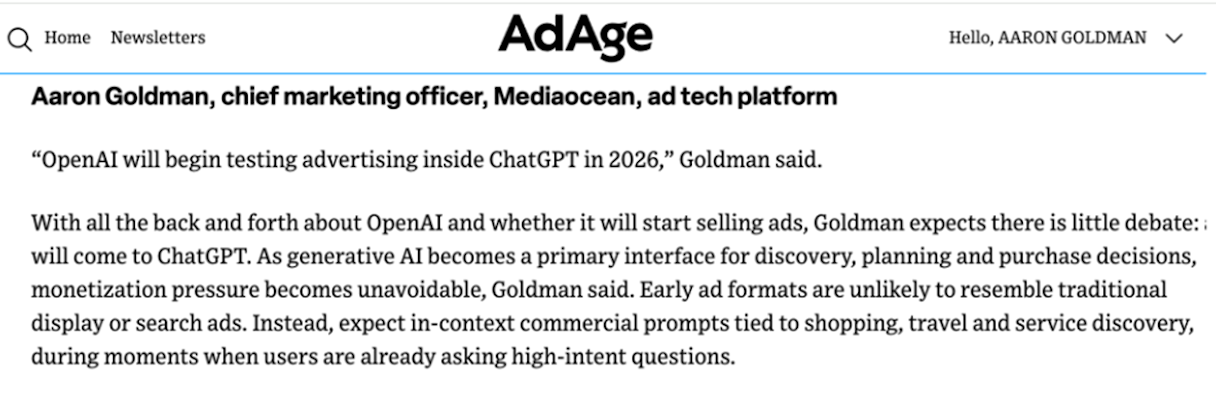
Ten days later, on January 16, OpenAI announced that: “In the coming weeks, we’re also planning to start testing ads.”
In the Ad Age article I speculated that early ad formats would incorporate: “in-context commercial prompts tied to shopping, travel, and service discovery, during moments when users are already asking high-intent questions.”
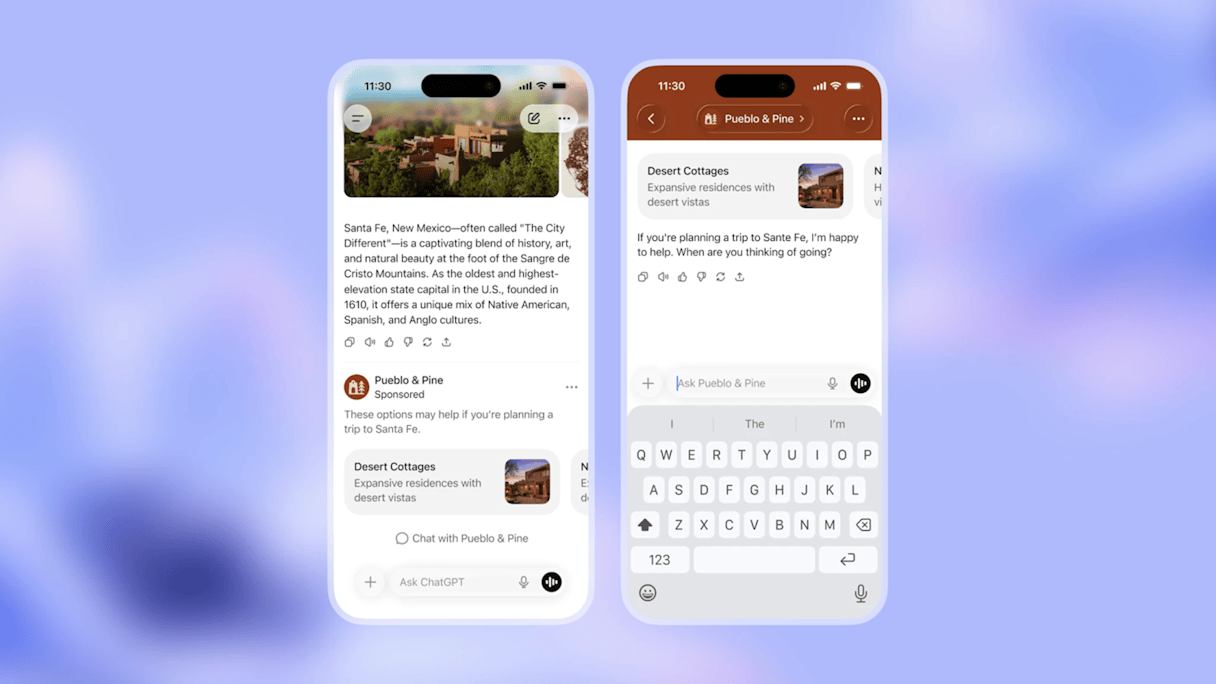
Indeed, OpenAI is on the same page, saying: “Conversational interfaces create possibilities for people to go beyond static messages and links. For example, you might see an ad and be able to directly ask the questions you need to make a purchase decision.”
Here’s a mockup they shared of what that will look like:
So yes, I called it. But, lest you think I’m a Johnny-come-lately here, I’d like to point out that I first predicted the rise of AI agents back in 2010 in my book Everything I Know About Marketing I Learned From Google – granted, back then I used words like “search-and-act engines” and “app-sisstants.”

I took a victory lap on LinkedIn in April of 2023, and later, in December 2024 I revisited my book in the context of ads on AI agents, warning that: “all marketers should be readying their plans to ensure they capitalize on the opportunity.”
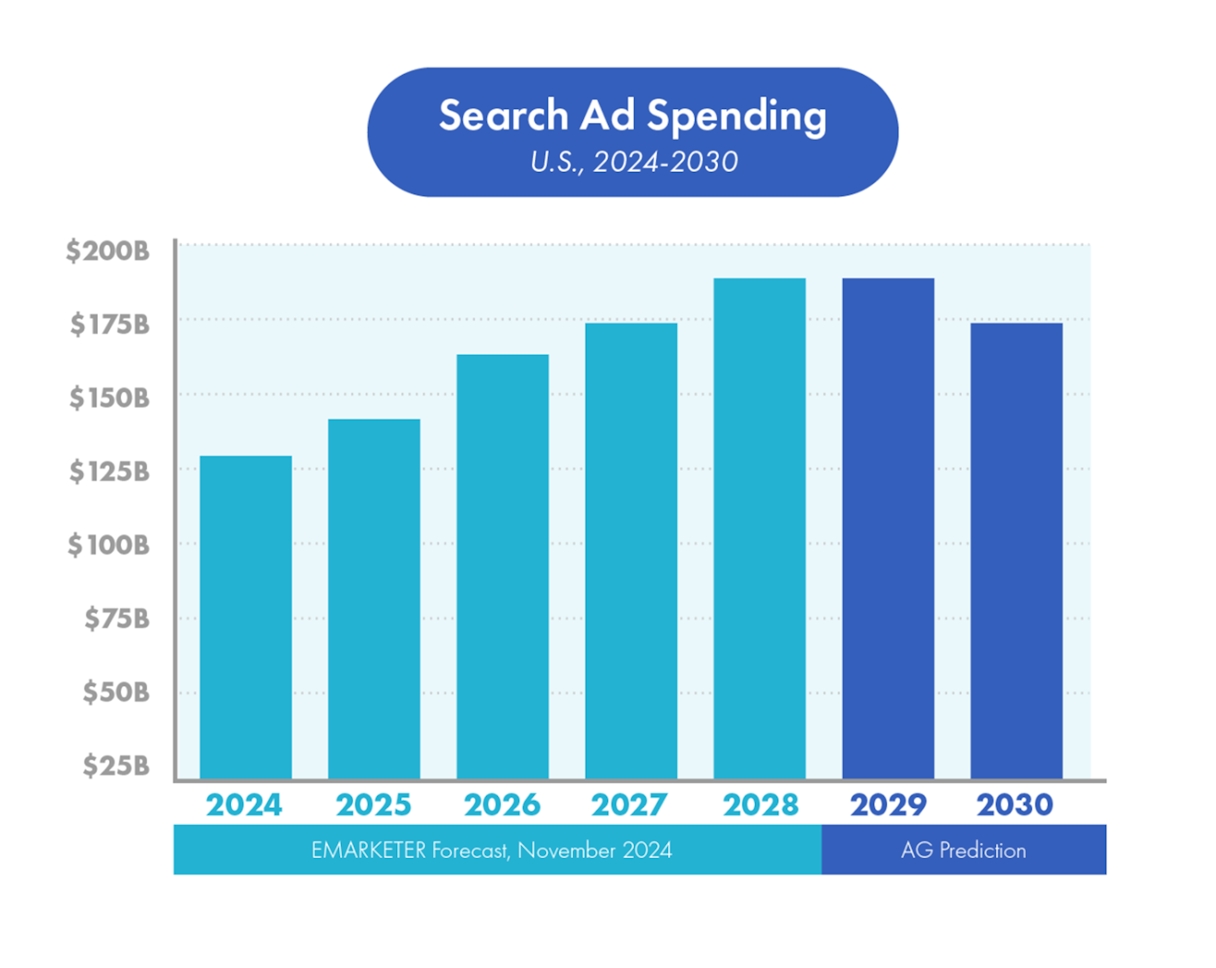
Then, almost exactly one year ago in January 2025, I made the prediction that: “this will be the last decade of growth for paid search advertising” owing to the potential cannibalization from ads on ChatGPT, Gemini, and the like.
Since that time, I’ve elucidated on zero-click search and coined the term -1MOT (‘negative-1 moment of truth’). I shared examples of commercial prompts on Gemini and said that: “it’s not hard to imagine them becoming ads when Google decides it wants to fully monetize AI Mode.”
I also reminded folks that Google started out with a disdain for ads before caving and eventually building the biggest ads business of all time. For his part, Sam Altman, once said that ads on ChatGPT would be a “last resort.” Yet here we are.
In August, I laid out the thesis for performance-based pricing on agentic AI ads. In that piece, I wrote that: “oftentimes ads are helpful results – especially when they include discounts or other promotions for the things you were looking for.”
Sam Altman used similar language in his post on X, sharing the news about ads, saying: “An example of ads I like are on Instagram, where I've found stuff I like that I otherwise never would have. We will try to make ads ever more useful to users.”
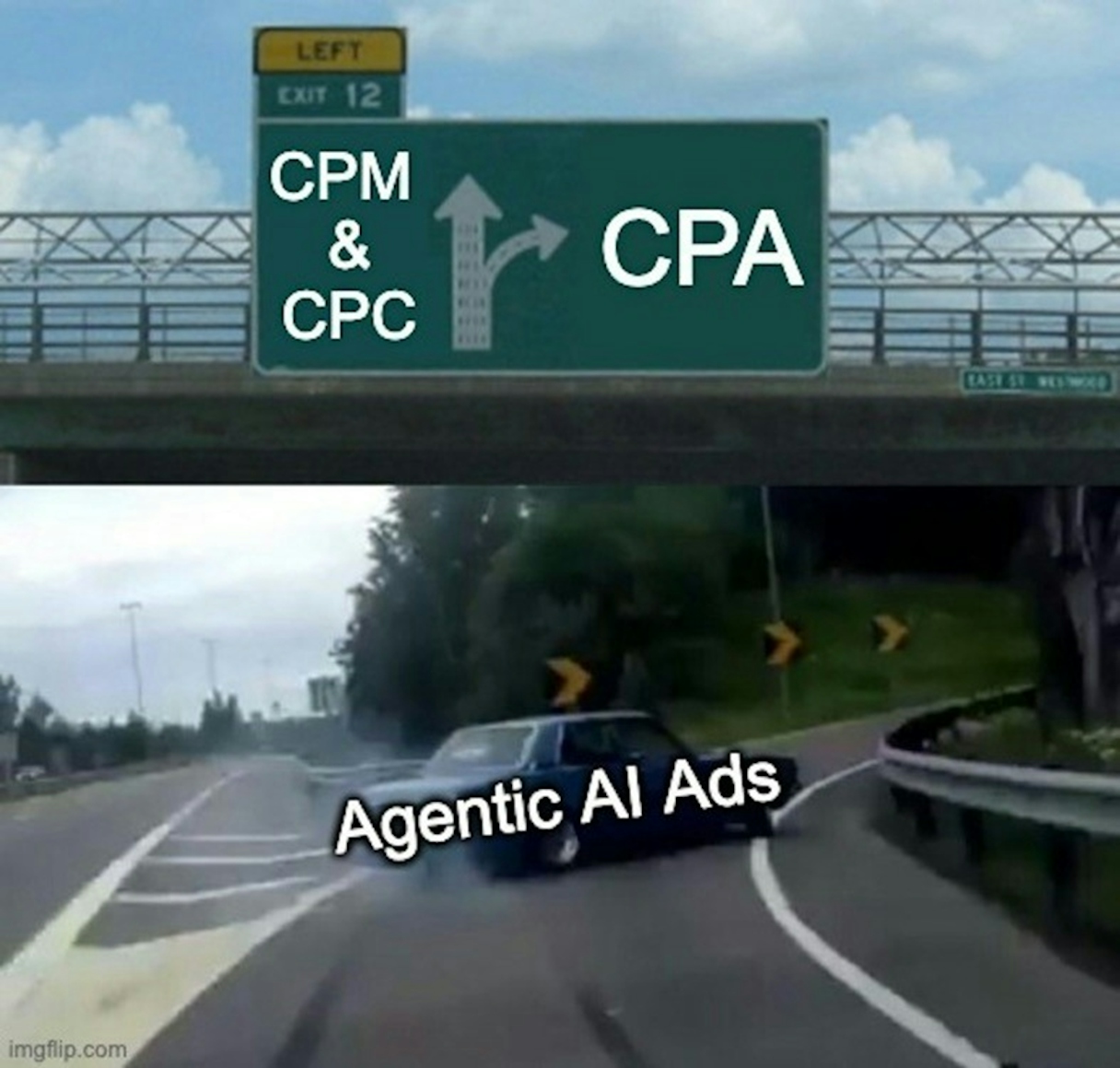
A few weeks later, I reminded everyone that it’s not AI or ads, it’s AI AND ads. My point was that: “advertising is really the only way that ChatGPT and other AI agents will be able to scale across the global population and realize their full potential – and valuation.”
Sure enough, in OpenAI’s announcement, they made the case for ads: “so more people can benefit from our tools with fewer usage limits or without having to pay.”
Fast forward to October, and I was ready to go all in on agentic AI ads, parlaying the Wesley Snipes film Passenger 57 to proclaim that ads always win and advertising on AI agents is a sure bet.
At that time, news came out about Perplexity pausing their ad formats, but I bet the over, saying that: “AI agents will be the most lucrative advertising ‘channel’ of all time.” And I stand by that.
Now here we are today, and ads on ChatGPT are weeks away. While I can’t say I’m surprised, I’m pleased to see how much thought they’ve put into the rollout. This isn’t some haphazard test.
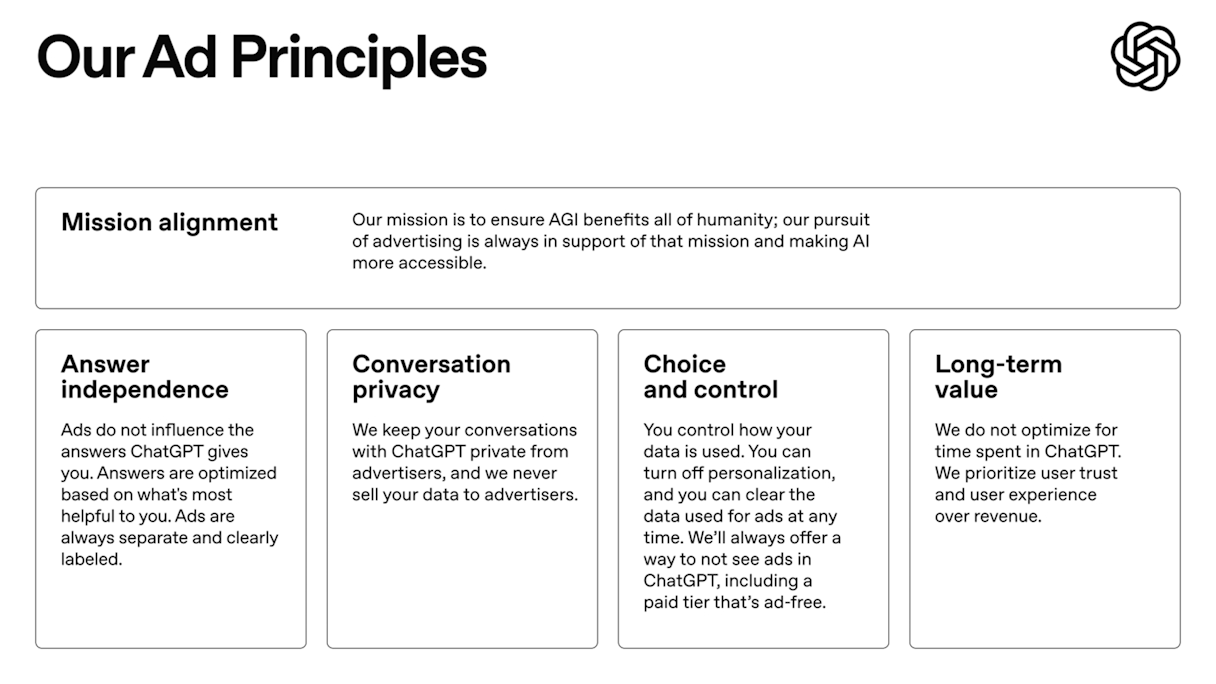
The official OpenAI post on X included a graphic outlining four ad principles designed to ensure that ads on ChatGPT won’t detract from the user experience nor compromise privacy. They also tied it to their mission and added a nod to AGI, which should get adtech media and community entity AdTechGod excited.
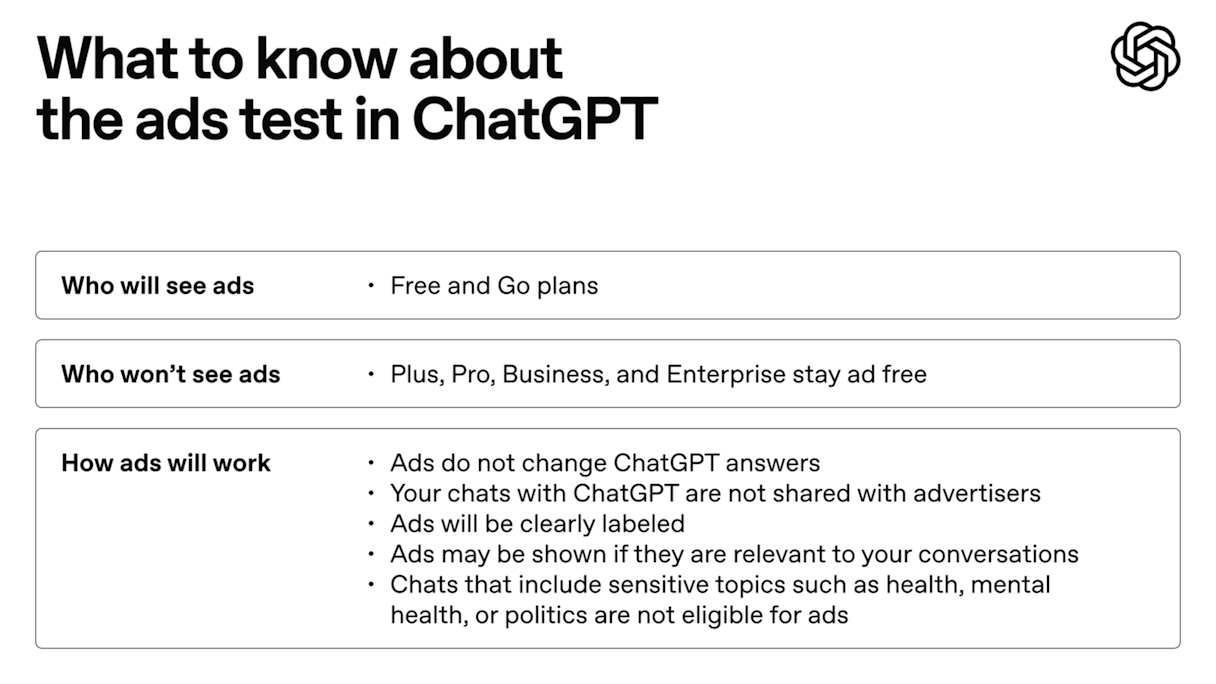
To further set expectations, and proactively address objections, OpenAI shared a chart showing who will see ads and how they will work. Of note, they’re coming out of the gate with no ads on “sensitive topics” such as health and politics, but, knowing how lucrative those categories are for advertisers, I’d say it’s only a matter of time before they move those goalposts.
So, what should brands do now? Simple. Start testing. Immediately. As soon as these ads go live.
Unless you’re in healthcare or politics. In which case, gear up for later in the year, as it’s likely they’ll open up around the US midterm elections when the revenue will be too tempting to refuse.
As we like to say in Chicago, if you don’t like the weather – wait 15 minutes.

